Introduction
Kaziranga National Park in Assam is one of those rare spots where wild India sort of breathes easy, still. It is a UNESCO World Heritage Site too, stretched along the floodplains of the Brahmaputra River and it holds the largest population of the Great Indian One-Horned Rhinoceros in the whole world. Alongside that, you’ll find tigers, elephants, wild water buffalo and well over 480 kinds of birds, so yeah it feels wonderfully alive all the time.
Still, there’s always this question that comes up for every traveller before they book anything, like which tourism zone, in Kaziranga National Park, is actually the best?
The honest answer is — it depends on what you are looking for. Kaziranga is divided into four distinct safari zones, and each one offers a completely different experience. This guide breaks down all four ranges clearly so you can pick the right one for your trip.
The Four Tourism Ranges of Kaziranga National Park
Kaziranga is managed across four official safari zones — Kohora (Central Range), Bagori (Western Range), Agaratoli (Eastern Range), and Burapahar (Far Western Range). Only one zone per safari session is permitted, so knowing your priorities in advance makes a big difference.
Kohora Zone (Central Range) – Best for First-Time Visitors
Kohora zone is the heart of Kaziranga National Park and the most visited range in the entire park. The entry gate sits just a couple of kilometres off the National Highway near Kohora village, making it the most accessible starting point for tourists arriving from Guwahati or staying near the main park road.
This range covers the Daglang and Foliamari areas and offers a well-marked safari trail of approximately 28 kilometres that takes around two hours to complete. The landscape is a stunning mix of open grasslands, wetlands, and scattered forests — the ideal setting for spotting the Big Five of Kaziranga.
Wildlife you can expect here includes the one-horned rhinoceros grazing in open grasslands, herds of Asian elephants, wild water buffalo, swamp deer, and hog deer. Tigers are present but not always easy to spot given the dense grass cover. The large wetlands (beels) in this zone attract hundreds of migratory birds during the winter months.
Both gypsy safari and elephant safari are available in Kohora. If you are visiting Kaziranga for the first time and want reliable wildlife sightings with good infrastructure around, Kohora is your best starting range.
Bagori Zone (Western Range) – Best for Rhino and Elephant Sightings
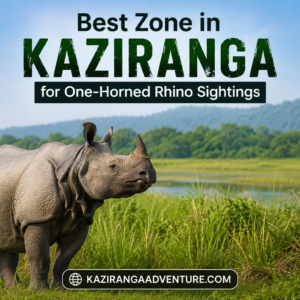
The Bagori or Western Range sits approximately 11 kilometres from the Kohora bus stand, with its entry gate at Bagori village. It is widely considered the best zone for intimate rhino and elephant encounters in Kaziranga National Park.
The terrain here is wilder and more varied than Kohora — marshy patches, thick grassland corridors, and numerous watering holes that pull large herbivores in throughout the day. The safari trail is around 26 kilometres and takes about two hours. Fair warning: the ride is bumpier than Kohora, but wildlife enthusiasts consistently rate it as the more rewarding experience.
Bagori is kind of known for having this really dense population of one horned rhinoceroses, plus wild elephants and even wild water buffaloes. The scattered waterholes around here kinda work like natural meeting places, so visitors end up with those longer, close-range views that are harder to get anywhere else. You can also often spot swamp deer, hog deer and wetland barasingha, in a way that feels almost too easy. And then there is this extra rare chance, somewhere within the zone, of seeing the golden tiger, which is a genetic variant with fur that shifts amber or takes on a golden-ish tone.
The Western Range is the most preferred zone for elephant safari in Kaziranga because the open, marshy landscape allows the elephant and its mahout to move close to rhinos without disturbing them. If your main goal is to see one-horned rhinos up close, Bagori is the best range to choose.
Agaratoli Zone (Eastern Range) – Best for Birdwatching and Scenic Landscapes
The Agaratoli or Eastern Range is located on the eastern edge of the park along the National Highway, with the entry gate situated in the small town of Agaratoli. It is the quietest and least crowded of the main safari zones, which makes it a favourite for nature photographers and serious birdwatchers.
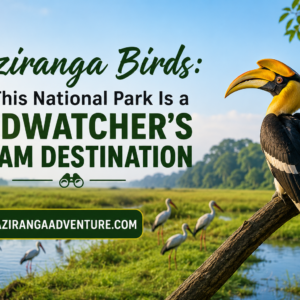
The scenery around here seems kind of shaped by grasslands wetlands, and a lot of water patches that pull in an extraordinary mix of birds. You see things like Greater Adjutant Stork, Brahminy Duck, Fishing Eagle, geese, pelicans, waders and also various raptors, and they gather in particular during the winter migration time. If birdwatching is the main thing you care about, then Agaratoli is the best zone in Kaziranga National Park, no real doubt.
As for wildlife, yes you can spot one-horned rhinos, swamp deer, tigers, and wild elephants but the counts tend to be a bit lower than Kohora and Bagori. The eastern zone also gives you lovely views of the Brahmaputra River tributaries, plus you get the hilly land on the opposite bank, so it makes a scenic background that the central side just can’t really match.
This zone is also the only safari zone in Kaziranga that offers a boat safari experience, giving visitors a completely different perspective of the park from the water.
Burapahar Zone (Far Western Range) – Best for Offbeat Experiences and Trekking
The Burapahar Zone is Kaziranga’s most offbeat and least commercially crowded range. Located around 40 kilometres from the Central Range, its entry gate is at Ghorakati village on the National Highway — the first zone you pass if travelling from Guwahati. The Rhinoland Park serves as the safari starting point here.
Unlike the flat floodplain landscape of the other three zones, Burapahar has hilly, densely forested terrain with thick tree canopy. This changes the wildlife you encounter here. Burapahar is the only zone in Kaziranga National Park where you can spot the Hoolock Gibbon, the only ape species native to India. Hornbills, capped langurs, smooth-coated otters, and spotted deer are also regularly seen.
Only gypsy safari is available in this zone, but Burapahar also offers guided trekking on a designated forest trail — a rare and immersive activity that no other Kaziranga zone provides. If you have already done safari in Kohora or Bagori and want to explore a different face of Kaziranga, Burapahar is an excellent second-day addition.
Quick Comparison Table
- Kohora (Central Range) — Best for first-time visitors, reliable Big Five sightings, both gypsy and elephant safari available.
- Bagori (Western Range) — Best for rhino and elephant sightings, elephant safari recommended, wilder terrain.
- Agaratoli (Eastern Range) — Best for birdwatching, scenic beauty, quieter experience, boat safari option.
- Burapahar (Far Western Range) — Best for offbeat exploration, Hoolock Gibbon, trekking, less crowd.
Which Range Should You Choose?
If it is your first visit to Kaziranga and you want the best overall wildlife experience with easy access and good infrastructure, go with Kohora (Central Range).
If seeing one-horned rhinos and elephants at close range is your top priority, book the Bagori (Western Range) and consider the elephant safari specifically.
If you are a birdwatcher, wildlife photographer, or someone who prefers peaceful, uncrowded landscapes, Agaratoli (Eastern Range) is your best match.
If you want something different from the usual tourist trail — forests, hills, gibbons, and trekking — Burapahar is the zone to choose.
For visitors with two or more days, combining Kohora or Bagori on day one with Agaratoli or Burapahar on day two gives you the full, rounded picture of what makes Kaziranga genuinely extraordinary.
Best Time to Visit Any Range in Kaziranga
The park is open from November to April. Winter (November to February) is the best season — cool temperatures, low grass, and high wildlife visibility make it ideal for safaris across all zones. March and April offer good sightings near waterholes but can be warm. The park closes fully during monsoon from June to October due to Brahmaputra flooding.
Book your jungle safari early, especially for Kohora and Bagori during peak winter months, as slots fill up quickly.
FAQs
Bagori (Western Range) is the best for rhino sightings, while Kohora (Central Range) is also excellent.
Kohora is ideal for first-time visitors due to its easy access, diverse wildlife, and better tourist facilities.
Agaratoli (Eastern Range) is the top choice for birdwatching, especially during the winter season.
Yes. Visiting multiple ranges gives you a more complete wildlife and safari experience.
Kohora and Bagori both offer elephant safaris, with Bagori being the most popular.
Yes. It’s perfect for offbeat safaris, Hoolock Gibbon sightings, and nature trekking.
November to February is the best time, with early morning safaris offering the best wildlife sightings.
Conclusion
Kaziranga National Park does not have one single best range — it has the right range for every kind of traveller. Kohora welcomes first-timers with open grasslands and reliable Big Five sightings. Bagori rewards wildlife enthusiasts with the closest rhino and elephant encounters in the park. Agaratoli offers birdwatchers and photographers a quieter, more scenic escape. And Burapahar takes the adventurous soul into forests where gibbons call and trails disappear into the hills.
The smartest way to experience Kaziranga is to visit more than one zone. Every range adds a new layer to the story of this remarkable park — a park that has brought the one-horned rhinoceros back from the edge of extinction and continues to be one of India’s greatest wild places.