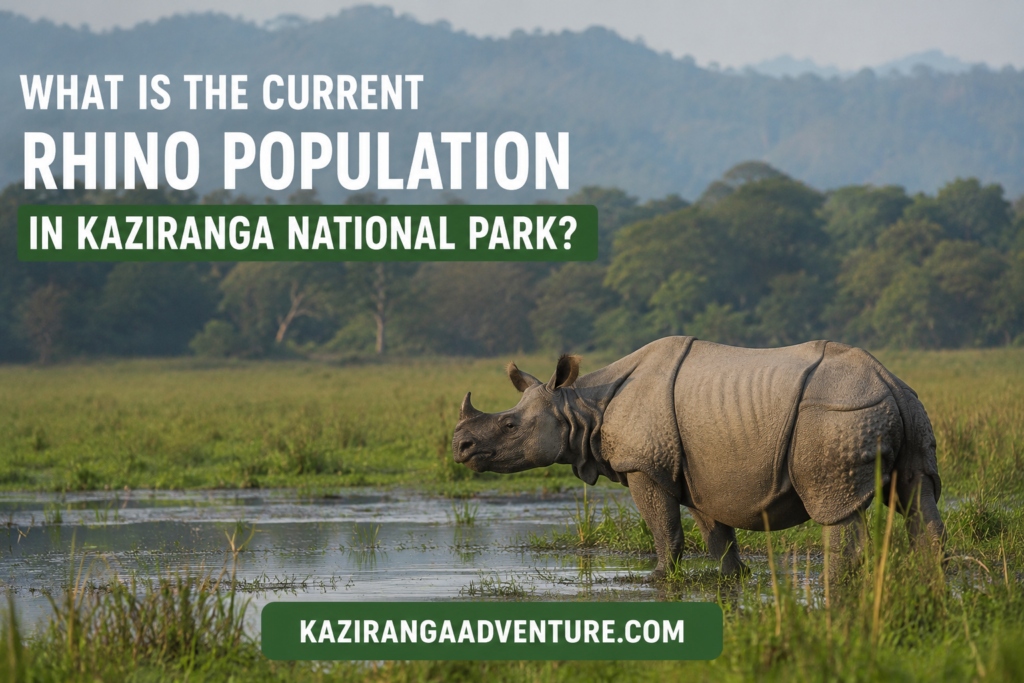
If there is one wildlife yarn from India that has genuinely moved the world, it is the return of the greater one-horned rhinoceros in Kaziranga National Park. This is a species that, once stood right on the edge of vanishing, now seems to settle and prosper in the floodplains of Assam . And now travelers, researchers and wildlife admirers keep circling around the same simple idea, how many rhinos are actually sitting in Kaziranga right now?
Let us walk you through the numbers, the history behind them, and what makes this conservation journey so extraordinary.
Where Does Kaziranga Stand Today?
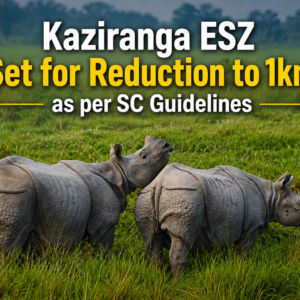
The most recent official count places the one-horned rhino population in Kaziranga National Park at 2,613 individuals. This figure comes from the 14th Rhino Population Census, which recorded a jump of 200 rhinos from the previous count of 2,413 in 2018. That is a significant and healthy increase, and it tells you a great deal about the direction conservation efforts are heading.
Out of those 2,613 rhinos that were counted inside Kaziranga, the breakdown looks like this: 1,823 are adults over six years of age, 365 are sub-adults between three and six years, 279 are juveniles between one and three years and 146 are calves under one year old. A healthy spread across the age groups, kind of like a steady mix, signals the population is not only large but also actively breeding and growing, you know.
Across all of Assam, the total rhino number climbs to about 2,845 once figures from Orang National Park and Pobitora Wildlife Sanctuary are folded in. Then by early 2025 , the wider regional estimate for the greater one-horned rhino across India hit roughly 4,075 individuals. In that, Kaziranga alone holds more than 70 percent of the whole total worldwide, so it’s pretty significant.
A Species Pilled Back From The Edge
Getting a sense for where Kaziranga is today really means you have to know where it started from. In the early 1900s, hunting with no controls had pushed the rhino count down to, just a handful basically. The woodland was put under formal protection in 1905. Then, through the next decades, the numbers inched up, slowly, steady-like.
By 2006 the tally hit 1,855. After that point though, poaching picked up again , and for a while it looked like all those improvements would be rolled back. Still, the park pulled off a striking comeback. Between 2009 and 2015, just that stretch saw the population increase by 353 rhinos. And since 2017, anti-poaching activity has eased, in the sense that the numbers have dropped sharply. So the latest census results now show, clearly, that protection has actually been consistent.
If you zoom out across the longer timeline, Assam’s rhinos went from roughly 600 animals in the 1960s to more than 4,000 by 2024. You don’t get that kind of recovery by luck, or by accident.
What Made This Possible?
Several forces combined to drive this result. The park operates under maximum legal protection under Indian law. Anti-poaching camps, round-the-clock patrolling, and intelligence-based operations have made it far harder for poachers to operate. Community involvement has grown stronger, with villages surrounding the park now playing an active role in reporting threats. Between 1980 and 2005, the park lost 567 rhinos to poachers. Today, annual poaching losses have been brought down to single digits in most years, a drop of roughly 86 percent since 2016.
The Indian Rhino Vision 2020 programme, launched in 2005, also contributed by pushing for translocation of rhinos to newer protected areas. Parks like Manas, which had zero rhinos at the start of the programme, now have a growing population.
Challenges That Remain
No conservation story is without its difficulties. Kaziranga is in the floodplain of the Brahmaputra River, and the yearly monsoon floods are kind of a recurring threat, you know. In 2019, those floods already led to the deaths of more than 200 animals in the park, including rhinos. Even though these floods are ecologically vital—they help shape the habitat and its natural character—they also, somehow push the wildlife onto roads and right into nearby human settlements, which can then cause road accidents, and conflict too.
Then there’s the other side, human encroachment along the park’s edges and especially around the highway that stretches along the southern boundary, remains a real ongoing problem. Since the rhino population is increasing, the pressure on usable habitat goes up as well, and this is why conservation planners are now trying to stretch wildlife corridors out further, and to lower the density related risks that come when many animals are in one concentrated zone.
Seeing Rhinos in Kaziranga: What To Expect
If you are planning a visit to Kaziranga National Park, the rhino numbers work in your favor. With over 2,600 individuals spread across the park’s core zones, sightings are not rare or lucky moments. They are almost guaranteed, especially during the dry winter months from November to April when the tall elephant grass recedes and animals are more visible near open water.
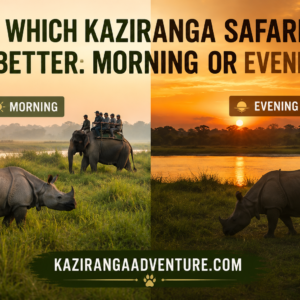
The four safari zones, Central (Kohora), Western (Bagori), Eastern (Agaratoli), and Burapahar, each offer different terrain and wildlife compositions. The Western Bagori Zone and Central Kohora Zone are particularly well-known for high rhino density. Jeep safaris during early morning slots offer the best conditions for photography and prolonged sightings.
Elephant safaris, available in the Kohora and Bagori zones, bring you even closer to rhinos in a quiet and non-intrusive way. These slots fill up fast, particularly during peak season, so booking in advance through Kaziranga Safari Booking Online makes practical sense.
FAQs
A: Kaziranga is home to 2,613 one-horned rhinos, according to the latest census.
A: Yes, the rhino population has steadily increased in recent years.
A: Western Bagori and Central Kohora are the best zones for spotting rhinos.
A: Monsoon floods, habitat loss, road accidents, and occasional poaching.
A: More than 70% of the world’s one-horned rhinos live in Kaziranga.
A: November to April offers the best wildlife viewing conditions.
A: Yes, both jeep and elephant safaris can be booked online.
Conclusion
The rhino population in Kaziranga National Park is one of the most inspiring numbers, honestly in global wildlife conservation. From near extinction in the early 1900s, to now over 2,600 individuals today, the greater one-horned rhinoceros has come back in a way few species have really matched anywhere in the world. And yeah, that success does not happen by luck; it comes from years and years of forest guarding, anti-poaching efforts, neighborhood involvement, and a serious legal commitment from the Indian government.
So if you are a traveler heading into Assam , a Kaziranga safari is not just a wildlife outing. It feels more like a front row view of one of conservation’s big wins that is still moving forward, season after season. Whether you go for a jeep safari in the Central Zone or you pick that early morning elephant ride through the Bagori grasslands, the rhinos you spot are like living evidence that protection actually works, even when things seem slow at first.