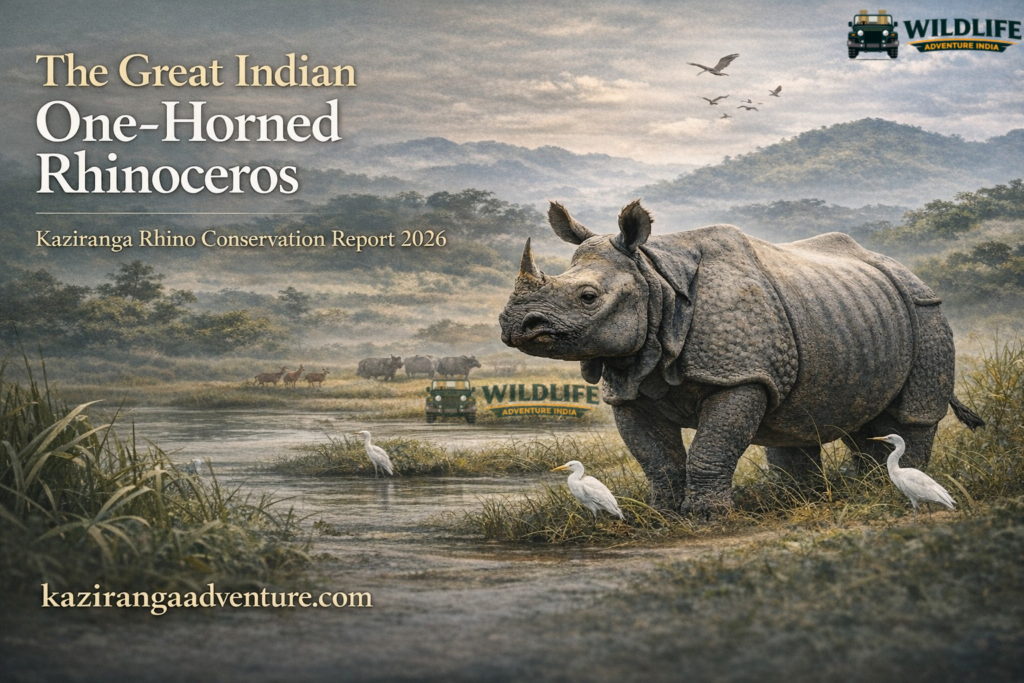
The story of the one-horned rhinoceros population in Kaziranga National Park is one of the most inspiring examples of wildlife recovery in the world. At the start of the twentieth century, uncontrolled hunting, habitat destruction, and human expansion pushed the species close to extinction. Today, however, the steady growth of the one-horned rhinoceros population in Kaziranga National Park reflects more than a century of strong conservation planning, scientific research, and strict law enforcement.
The success of this recovery is clearly visible in the Great Indian one-horned rhinoceros population statistics. From a critically low number of individuals in the early 1900s, the population has grown to several thousand rhinos. These Great Indian one-horned rhinoceros population statistics demonstrate how long-term conservation can reverse even severe wildlife decline. The consistent rise in the one-horned rhinoceros population in Kaziranga National Park shows the importance of protected areas and effective management.
The species is scientifically known as the Indian one-horned rhino, with the scientific name Rhinoceros unicornis, a unique and powerful animal native to the Indian subcontinent. While this classification reflects improvement, the conservation status of the Indian rhinoceros in India still requires continued protection, monitoring, and habitat management.
Population Growth and Census Monitoring
The steady increase in the one-horned rhinoceros population in Kaziranga National Park is carefully documented through regular surveys. The latest rhino census in Kaziranga, Assam, provides updated figures that confirm a strong and stable Kaziranga National Park rhino population growth trend. These surveys are based on scientific counting methods, field patrol observations, and verification techniques.
Official Kaziranga National Park wildlife census data form the backbone of conservation planning. Authorities analyse age groups, calf survival rates, and territorial distribution. When examining Assam rhino population statistics by year, it becomes clear that the Kaziranga National Park rhino population growth trend has remained largely positive over decades.
Each latest rhino census in Kaziranga, Assam, strengthens the globally recognised Kaziranga rhino conservation success story. Conservationists frequently reference the Great Indian one-horned rhinoceros population statistics to highlight this extraordinary recovery. The steady rise in the one-horned rhinoceros population in Kaziranga National Park proves that dedicated conservation strategies are delivering measurable results.
Habitat, Behaviour, and Ecological Importance
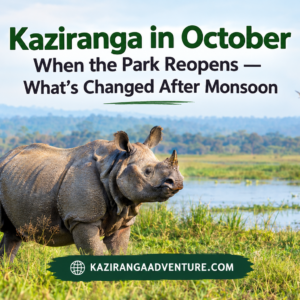
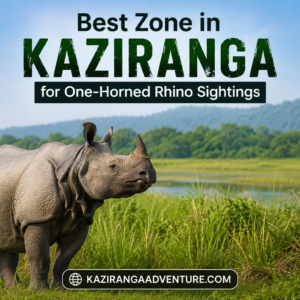
The habitat and behaviour of the Great Indian one-horned rhino are closely tied to floodplain ecosystems, wetlands, and tall grasslands. The park’s fertile plains, shaped by the Brahmaputra River, create ideal grazing conditions. The UNESCO World Heritage Site Kaziranga rhino habitat provides rich grasslands, freshwater pools, and protective cover.
As a designated UNESCO World Heritage Site, the Kaziranga rhino habitat park holds global ecological importance. The role of Indian rhinos in grassland ecosystems is critical. By feeding on tall grasses and shrubs, rhinos help maintain open habitats that support other species like deer, wild buffalo, and birds. The role of Indian rhinos in grassland ecosystems ensures biodiversity balance and healthy vegetation cycles.
The habitat and behaviour of the great Indian one-horned rhino include solitary living, territorial marking, and frequent mud wallowing to regulate body temperature. The breeding and reproduction rate of Indian rhinos is moderate, with females typically giving birth to one calf every three to four years. This slow breeding and reproduction rate of Indian rhinos means that conservation protection must remain strong.
The lifespan of the Great Indian rhinoceros in the wild is approximately 35–40 years. This long lifespan allows multiple breeding cycles, contributing to stable population growth. These biological traits directly influence the conservation status of the Indian rhinoceros in India, making continued monitoring essential.
Species Comparison and Global Context
Understanding the difference between the Indian rhino and the African rhino species helps clarify the uniqueness of Rhinoceros unicornis. The difference between Indian and African rhino species includes physical characteristics such as the Indian rhino’s single horn and armour-like skin folds, while African rhinos typically have two horns and different facial structures.
The Indian one-horned rhino’s scientific name, Rhinoceros unicornis, distinguishes it from the African species. Although their habitats differ, all rhinos face similar threats. The IUCN Red List status of the one-horned rhinoceros reflects global concern but also progress. The improved conservation status of the Indian rhinoceros in India is largely due to the success of protected areas like Kaziranga.
The consistent growth seen in the Great Indian one-horned rhinoceros population statistics demonstrates how targeted conservation can change global wildlife trends. The steady one-horned rhinoceros population in Kaziranga National Park plays a major role in securing the species’ future.
Threats and Protection Measures
Despite success, several threats to the Indian one-horned rhinoceros’ survival continue to challenge conservationists. Poaching remains one of the most serious threats to the survival of the Indian one-horned rhinoceros, driven by the illegal horn trade. Habitat loss and human-wildlife conflict also create risks.
To combat these dangers, strong anti-poaching measures in Kaziranga National Park are enforced. Armed patrol teams, watchtowers, intelligence networks, and modern surveillance technology are key components of these anti-poaching measures in Kaziranga National Park. These strategies have significantly reduced illegal hunting and strengthened the Kaziranga rhino conservation success story.
Seasonal flooding results in periodic Kaziranga flood impact on the rhino population. While floods support grassland renewal, severe flooding can cause displacement or mortality. Conservation authorities mitigate the Kaziranga flood impact on the rhino population by constructing elevated highlands and safe migration corridors.
Despite these challenges, the Kaziranga National Park rhino population growth trend remains positive. Verified Kaziranga National Park wildlife census data and updated Assam rhino population statistics by year confirm long-term resilience in the one-horned rhinoceros population in Kaziranga National Park.
Tourism, Awareness, and Sustainable Conservation
Tourism plays an important supportive role in conservation funding. The best time to see one-horned rhinos in Kaziranga is between November and April, when water levels recede. During the best time to see one-horned rhinos in Kaziranga, visitors can safely observe the thriving one-horned rhinoceros population in Kaziranga National Park.
The international recognition of the UNESCO World Heritage Site Kaziranga rhino habitat attracts researchers and wildlife enthusiasts from around the world. This recognition strengthens the Kaziranga rhino conservation success story and brings global attention to the improved conservation status of the Indian rhinoceros in India.
Revenue generated during the best time to see one-horned rhinos in Kaziranga directly supports habitat management and strengthens anti-poaching measures in Kaziranga National Park. Public education programmes also help reduce threats to the Indian one-horned rhinoceros’ survival.
Conclusion
The remarkable growth of the one-horned rhinoceros population in Kaziranga National Park represents a global conservation milestone. The upward trend documented in the Great Indian one-horned rhinoceros population statistics, verified through Kaziranga National Park wildlife census data, and confirmed by the latest rhino census in Kaziranga, Assam, reflects decades of dedicated effort.
The steady Kaziranga National Park rhino population growth trend, supported by reliable Assam rhino population statistics by year, proves that conservation works. Although threats to the Indian one-horned rhinoceros’ survival and the periodic Kaziranga flood impact on the rhino population remain challenges, the overall progress remains strong.
Through understanding the habitat and behaviour of the Great Indian one-horned rhino, the breeding and reproduction rate of Indian rhinos, the lifespan of the Great Indian rhinoceros in the wild, and the role of Indian rhinos in grassland ecosystems, we recognise the species’ ecological importance. Combined with strong anti-poaching measures in Kaziranga National Park and the improved conservation status of the Indian rhinoceros in India, the Kaziranga rhino conservation success story continues to inspire the world.
Ultimately, the thriving one-horned rhinoceros population in Kaziranga National Park offers hope that dedicated conservation can secure a lasting future for Rhinoceros unicornis and preserve this magnificent species for generations to come.