
If you are planning a trip to Kaziranga National Park and you’re trying to decide between a morning safari and an evening safari, you are definitely not alone. This is honestly one of the most common questions visitors throw around before booking, like “what’s better” and “when should i go”. The short answer is, both have their own sort of charm. Still, if you want to figure out which one gives you the best shot at wildlife sightings, better photography, and a more rounded experience, this blog will sort it out for you in a clear way.
Let’s go through everything you need to know so you can make the right call before your Kaziranga safari booking.
Understanding Kaziranga Safari Timings
Before comparing the two slots, it helps to know the official timings.
Morning gypsy safari in Kaziranga typically kicks off around 7:00 AM, and it sort of finishes by 9:30 to 10:00 AM. The elephant safari, which is a more immersive separate kind of ride, often begins even earlier, between 5:00 AM and 7:00 AM, and it’s only in a few particular areas such as Central (Kohora) and Western (Bagori).
Then for the afternoon or evening safari, the Kaziranga window starts near 1:30 PM and keeps going until about 4:30 PM , though it really depends on the season, and also the forest department rules. In general, both slots are about two hours long for gypsy safaris.
Now, with timings clear, let us get into what actually matters.
Why Morning Safari Wins for Wildlife Sightings
Most wildlife experts and experienced safari guides at Kaziranga National Park will tell you the same thing: morning is when the jungle truly comes alive.
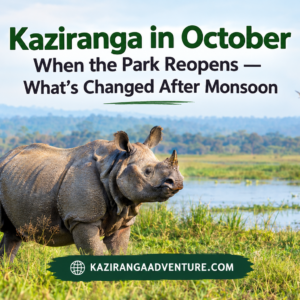
In Kaziranga, you’ll notice the animals, especially the Indian one-horned rhino, wild water buffalo, swamp deer, and elephants, get going more or less in the early hours. They’ve been kind of resting through the night, then they come out to graze, sip water, and generally wander around while the air is still cooler. The grasslands, particularly across the Kohora and Bagori zones, feel full and busy, with rhinos grazing in plain sight during those first hours, right after daybreak.
If you are hoping to spot a Royal Bengal tiger, your chances are significantly higher in the morning when tigers return from their nocturnal hunt and are still visible near waterholes or tall grass edges.
The light during morning safari is also softer and more golden, which is a big deal for anyone who wants good photos. Wildlife photography in Kaziranga is genuinely special in the early hours. The mist over the grasslands, the birds calling from the treetops, and the sight of a one-horned rhino standing quietly in the open — it is the kind of scene that stays with you.
What the Evening Safari Offers
The afternoon safari in Kaziranga, also called the evening safari by most visitors, is not something you should dismiss entirely. It has its own benefits, and depending on the season, it can be surprisingly rewarding.
When the temperatures dip in the later afternoon, animals start getting active again, after they kind of settled down during that midday heat. Especially elephants , they often drift toward water edges in the evening. Birds too, their activity rises quite noticeably as dusk approaches, so an evening safari in Kaziranga is a smart option for people who watch birds.
The Agaratoli Zone in the Eastern Range is a fantastic spot for the afternoon safari if you are specifically interested in birds. The wetlands and water bodies in this zone attract species like the Greater Adjutant Stork, Brahminy Duck, and Fishing Eagle as the day cools down.
Evening also gives you the chance to enjoy longer golden light closer to sunset, especially in the open meadows of the Bagori (Western) zone.
Key Differences at a Glance
Morning safari starts early and the air is cool and fresh. Animals are active, alert, and easier to spot in open areas. Mist adds a visual quality that makes the whole experience feel cinematic. Elephant safaris are only available in the morning, so if that is on your list, the choice is already made for you.
Evening safari has warmer starting temperatures but cools toward the end. Animals like elephants and birds are more visible near water in the later hours. The golden afternoon light, while different from morning mist, is also excellent for photography.
Can You Do Both on the Same Day?
Yes, absolutely. If you have a full day at Kaziranga, doing both a morning gypsy safari and an afternoon gypsy safari is very much possible. Many visitors choose to do morning safari in one zone, like Kohora, and the afternoon safari in another zone, like Bagori. This way you experience two completely different landscapes and improve your overall chances of sightings.
Kaziranga Adventure offers full-day safari packages and customized tour packages that can include multiple safari slots across different zones, making your trip seamless and well-organized.
Which Zone to Pick for Each Time Slot?
For morning safari, the Central Kohora Zone and Western Bagori Zone are the top picks. Both zones have dense rhino populations and active wildlife early in the day. Kohora is especially recommended for first-time visitors.
For the afternoon safari, the Bagori Zone and Agaratoli Eastern Zone are better choices. Bagori has open waterholes that attract animals in the late afternoon, and Agaratoli rewards birdwatchers beautifully.
If you are visiting Burapahar Zone for its unique forest terrain and Hoolock Gibbon sightings, either slot works well.
Quick Tips Before You Book
Book your Kaziranga safari in advance, especially if you are visiting between November and February, which is peak season. Slots fill up fast and last-minute availability is rarely guaranteed.
Carry a light jacket for morning safaris as it gets cold, particularly from November to January. Wear muted, earthy tones and avoid bright colours that can startle animals. Keep noise to a minimum inside the park. The forest rewards patience.
If rhino sighting is your main goal, morning safari is your best bet. If birdwatching is what excites you, consider the afternoon slot.
FAQs
Morning safari is generally better for wildlife sightings, especially for rhinos and tigers.
Gypsy safari starts around 7:00 AM. Elephant safari begins as early as 5:00 AM.
The evening or afternoon safari typically starts at 1:30 PM.
No. Elephant safari is only available in the morning hours.
Yes, many visitors do both in a single day across different zones.
Kohora (Central Zone) and Bagori (Western Zone) are the top choices for morning safari.
Yes. Morning light is especially ideal for wildlife photography in Kaziranga.
A standard gypsy safari lasts approximately two hours.
Conclusion
If you ask any local guide or wildlife enthusiast in Kaziranga, the morning safari will nearly always be the first recommendation . The mix of cool air, lively wildlife, gentle golden light, and that quiet sort of magic of being inside the forest while the day starts moving, makes the whole thing something you just cannot match.
Still , the evening safari has real weight too, especially if you’re into birds or if you want to stretch your time within the park. The best way, if your plan lets you, is to do both. Kaziranga is one of those places where there’s always something to show you, no matter the time of day.