
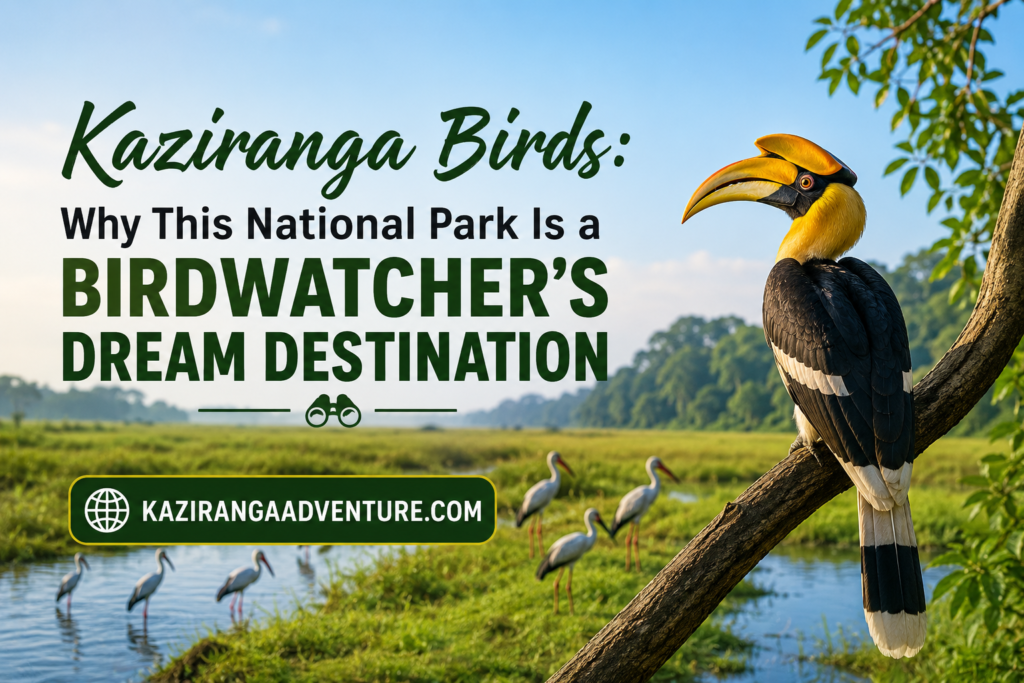
Most people who plan a trip to Kaziranga National Park in Assam come for the one-horned rhino. That is completely understandable. But here is something many first-time visitors discover only after they arrive — Kaziranga is equally, if not more, spectacular for its birds. In fact, if you love birdwatching, this place will genuinely surprise you.
Kaziranga is home to more than 500 species of birds, and that alone puts it right up there among the top birdwatching destinations in India. Then you add the variety of habitats, those misty winter mornings when everything feels softened, and the almost eerie quiet of the grasslands,and well you end up with a place that any serious birder would find hard to walk away from.
This blog covers everything you need to know — which birds to spot, which zone to visit, the best time to go, and how to make the most of your birdwatching trip to Kaziranga.
Why Kaziranga Is Special for Birdwatchers
BirdLife International has officially recognized Kaziranga National Park as an Important Bird Area (IBA). This is not just a title — it reflects the park’s genuine role as a critical habitat for both resident and migratory bird species throughout the year.
What makes Kaziranga so good for birds is the variety of landscapes stuffed into one park, and it works really well. You get tall elephant grasslands, shallow swamps, oxbow lakes, riverine forests, plus the huge Brahmaputra floodplain all in one go , on one visit. Each of these habitats kind of pulls in a different set of birds. That’s why the species tally here is so impressively high too.
The park also protects around 30 globally threatened bird species. That is a remarkable figure that places Kaziranga on a short list of truly important birding locations in all of Asia.
Birds You Must Look for in Kaziranga
Bengal Florican
This is sort of the most searched-for bird you can find in Kaziranga, and honestly it feels a bit unbelievable when you think about it. The Bengal Florican is critically endangered, and it’s among the rare grassland birds worldwide that still hang on in small numbers. In Kaziranga, the open grasslands are one of the very last places where you can, realistically, spot one. The male shows up with a clear black and white look, and during the breeding season it does this intense courtship display, like a show. To see one counts as a real highlight even for the most experienced birders, because it’s not just common sightings there.
Greater Adjutant Stork
This large, somewhat ungainly-looking stork is another star of Kaziranga. Once widespread across South Asia, the Greater Adjutant is now found in very few places. Kaziranga is one of its strongholds. You can spot it near wetlands and open grasslands, often standing perfectly still before making a slow, deliberate move. Assam is one of only two states in India where this bird still breeds.
Great Indian Hornbill
If you visit the forested sections of the park, keep your eyes and ears open for the Great Indian Hornbill. Its large yellow casque and loud calls make it unmistakable. This bird is a vital seed disperser in the forest ecosystem and a genuinely beautiful sight in flight.
Bar-Headed Goose
In winter, the Brahmaputra wetland areas close to Kaziranga ,draw really big groups of Bar-Headed Geese, flying in from Central Asia. They are well known for that whole migration thing where they fly at extreme heights across the Himalayas. Seeing them drop onto the water, in that gentle winter light is the kind of moment you probably won’t forget, even after a while.
Pallas’s Fish Eagle and Grey-Headed Fish Eagle
Both of these raptors are regularly spotted in Kaziranga, particularly near the water bodies in the Eastern Range. They are large, powerful birds and excellent for bird photography because of their size and habit of perching in visible spots near the water.
Other notable species include Crested Serpent Eagle, Black-Necked Stork, Dalmatian Pelican, Spot-Billed Duck, Ruddy Shelduck, Swamp Francolin, Osprey, White-Bellied Heron, and Indian Pitta.
Which Zone Is Best for Birdwatching in Kaziranga
If birdwatching is your main reason for visiting, the Eastern Zone — also called the Agaratoli Zone is your best choice. This zone sits along the eastern edge of the park and is widely considered the top area for spotting birds in Kaziranga.
This place’s landscape is kinda a mix of wetlands, grasslands, and water bodies all around, and it tends to pull in a huge variety of species. You can actually see Greater Adjutant Storks, fishing eagles, Brahminy Ducks, Whistling Teal , and a lot more from a jeep safari, depending on where you stop. A bunch of experienced birders feel that a morning in the Eastern Zone kind of competes with some of the finest birding sessions you can find in Northeast India.
The Burapahar Zone (Far Western Range) is excellent for forest birds including Hornbills and Hoolock Gibbons. If you want a mix of forest birding and mammal spotting, this zone is worth adding to your itinerary.
The Central (Kohora) and Western (Bagori) Zones are better known for rhino and elephant sightings but still offer good waterbird sightings near the lakes and marshes inside the zones.
Best Time for Birdwatching in Kaziranga
The park is open from November to April, and this entire window is good for birding. But if you want to narrow it down:
November through February, yeah it is the best time for sure. Those migratory birds from Central Asia, Siberia, and Tibet begin showing up in November, and by December the wetlands are completely loaded with kinds you really can t spot during any other stretch of the year. Also the plants aren’t as thick in those months so, somehow, you get a clearer view of the birds. Mornings stay cool and misty and that just makes the whole thing feel even more immersive.
March and April are still good, particularly for resident species and grassland birds like the Bengal Florican. The grass starts to thin further in these months, improving visibility.
Avoid the monsoon season entirely. The park closes from May through October due to flooding from the Brahmaputra River. No safari activity is permitted during this period.
During the day, early morning is always best. Birds are most active in the first two to three hours after sunrise. Book a morning jeep safari for the Eastern Zone and arrive at the gate on time.
Tips for a Good Birdwatching Experience in Kaziranga
Carry binoculars. This sounds obvious, but many visitors arrive without them and regret it. Grassland birds and raptors are often spotted at a distance, and binoculars make a huge difference.
Bring a zoom lens camera if you are into bird photography. Kaziranga is genuinely one of the best places in India for bird photography, especially during the winter months when the light is clean and the birds are active.
Go with a local guide. The forest guides at Kaziranga are experienced and many of them know bird calls and habitats well. A knowledgeable guide will help you spot species you would otherwise walk past without noticing.
Stay quiet during the safari. Loud noise scatters birds. Stay calm, move slowly, and give the birds time to settle before you reach for your camera.
Book in advance. Safari slots in Kaziranga, especially for the Eastern Zone in winter, fill up fast. If you are visiting between December and February, book your jeep safari well ahead of your travel date.
Birdwatching as Part of a Kaziranga Wildlife Tour
One of the best things about Kaziranga is that birdwatching fits naturally into a broader wildlife safari. You do not need to choose between birds and rhinos — on most morning safaris, you will encounter both. A two-night or three-night stay gives you enough time to cover multiple zones and get a proper mix of mammal sightings and birding.
A typical itinerary for a birdwatcher might look like this: spend your first morning in the Eastern Zone for birding, your second morning in the Central Zone for rhinos and elephants, and your third morning in the Burapahar Zone for forest species. Evening safaris can be used for the Western Zone, which is popular for waterbirds near the lakes.
If you need help planning a complete Kaziranga safari booking, accommodation, and guide arrangements.
FAQs
A: Kaziranga is home to over 500 bird species, including both resident and migratory birds.
A: The Eastern Zone (Agaratoli) is the top zone for birdwatching in Kaziranga.
A: Migratory birds start arriving from November. The peak season is December to February.
A: Yes, BirdLife International has officially declared Kaziranga an Important Bird Area (IBA).
A: Yes, Kaziranga is one of the few places in the world where the Bengal Florican can still be spotted. The Eastern grasslands give the best chances.
A: Morning safaris are much better. Birds are most active in the first two to three hours after sunrise.
A: A local guide is strongly recommended. They know bird calls, habitats, and exact locations that you would miss on your own.
A: Absolutely. Winter months from December to February offer the best light and highest bird activity for photography.
A: Binoculars, a camera with zoom lens, muted-color clothing, and a field guide to Indian birds.
A: No. The park is open from November to April. It remains closed from May to October because of seasonal monsoon flooding.
Conclusion
Kaziranga is known the world over for the one-horned rhino, and that reputation is fully deserved. But for anyone who pays attention to the sky and the wetlands and the grassland edges, there is a second park hidden inside the first — one filled with hundreds of bird species, rare raptors, and seasonal visitors from distant lands.
Whether you’re some serious birder, ticking species off a mental list for decades , or you’re more the type that just likes to sit quietly and see a heron, sort of motionless at the edge of a lake, Kaziranga will still hand you something genuinely worth returning for. I’d suggest you time it from November through April, start off in the Eastern Zone first, and don’t forget to bring your binoculars along. After that, the birds of Kaziranga kind of take over the whole show and do the rest.