Kaziranga National Park is one of India’s biggest wildlife success stories, especially when it comes to protecting the one-horned rhinoceros. But behind this success lies a strong and well-planned anti-poaching system that works day and night. Poaching has always been a major threat to wildlife, especially rhinos, and Kaziranga has taken serious steps to control it.
In this blog, we will understand how Kaziranga protects its wildlife using modern technology, strict patrol systems, and a powerful intelligence network. The goal is simple—keep animals safe while maintaining a healthy ecosystem.
The Importance of Anti-Poaching Strategies in Kaziranga
Kaziranga is home to the largest population of one-horned rhinoceros in the world. Because of the high value of rhino horns in illegal markets, poachers often target these animals. This makes protection extremely important.
Over the years, the park authorities have built a strong system to reduce poaching incidents. Today, Kaziranga is often seen as a model for wildlife protection in India national parks, showing how proper planning and strict action can make a difference.
These efforts are not only saving animals but also increasing tourism, as visitors feel safe and confident visiting the park.
Use of Advanced Technology for Wildlife Protection
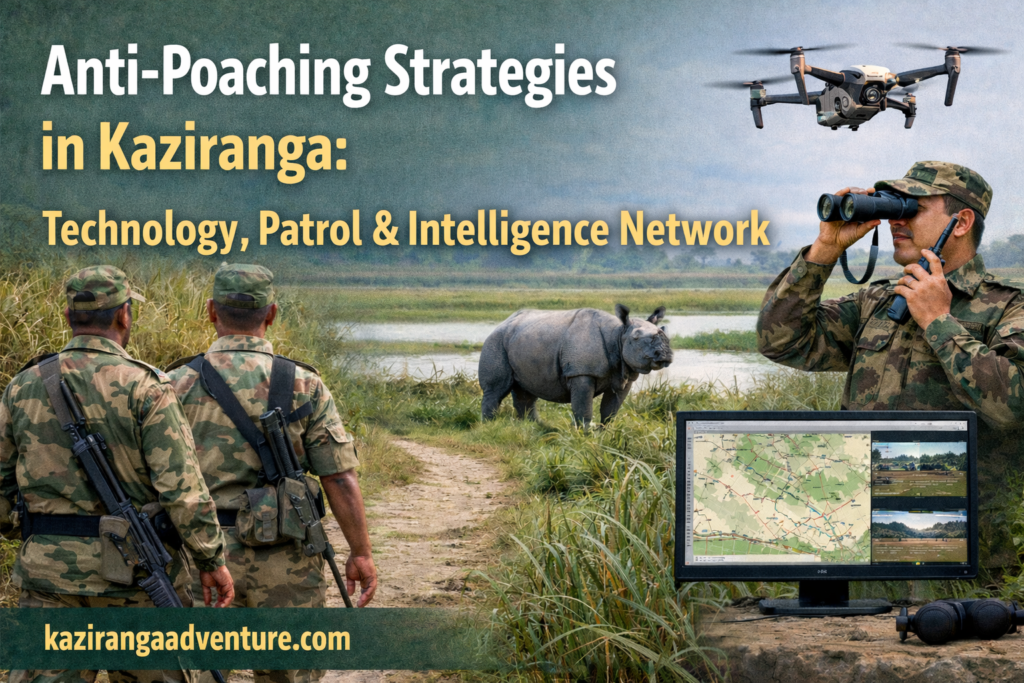
Technology plays a major role in modern wildlife protection. In Kaziranga, forest officials use various tools to monitor animal movement and track suspicious activities.
Surveillance systems like drones and GPS tracking help in keeping an eye on remote areas of the park. Camera traps are also used to monitor wildlife as well as human movement inside the forest.
These tools make it easier for authorities to respond quickly in case of any threat. This is why many experts consider Kaziranga a leader in technology used in wildlife conservation in India.
Strong Ground Patrol System
While technology is important, the real strength of Kaziranga lies in its ground patrol teams. Forest guards and frontline staff regularly patrol the park, especially in sensitive areas.
These patrols happen both during the day and at night. Guards move on foot, vehicles, and even boats in flood-prone areas. Their constant presence acts as a strong warning against poachers.
This system is one of the key reasons why anti poaching patrol in Kaziranga National Park has been successful over the years.
Intelligence Network and Local Support
Another powerful part of Kaziranga’s anti-poaching strategy is its intelligence network. Forest officials work closely with local communities to gather information about illegal activities.
Local people play an important role by sharing alerts and supporting conservation efforts. This connection between authorities and communities creates a strong defense system.
Timely information helps officials take quick action before any damage is done. This is why community involvement in wildlife conservation in Kaziranga is considered very important.
Strict Laws and Quick Action
Kaziranga follows strict laws against poaching. Anyone caught involved in illegal hunting faces serious legal consequences. The forest department also acts quickly whenever there is any sign of threat.
Rapid response teams are always ready to move into action. This quick reaction helps prevent incidents and ensures that wildlife remains protected.
Because of these efforts, Kaziranga has seen a significant reduction in poaching cases compared to the past. This success strengthens its reputation in wildlife conservation success stories in India.
Challenges Faced by Anti-Poaching Teams
Even with strong systems in place, protecting wildlife is not easy. The park faces issues like seasonal floods, rough landscape, and a large forest spread.
During the flood season, animals move to higher ground, which increases the risk of poaching. Forest staff have to work even harder during this time to ensure safety.
Despite these challenges, the dedication of the teams continues to protect the park effectively.
Impact on Wildlife and Tourism
The success of anti-poaching strategies has had a positive impact on both wildlife and tourism. The number of rhinos has increased, and other species are also thriving.
Tourists visiting Kaziranga feel more confident knowing that the park is well protected. This has helped boost Kaziranga safari experience, attracting visitors from across India and abroad.
A safe environment not only protects animals but also improves the overall travel experience.
Why Kaziranga Is a Model for Conservation
Kaziranga’s approach to wildlife protection is now studied and followed in other parts of India. The combination of technology, patrol, intelligence, and community support makes it a strong system.
It shows that conservation is not just about rules but also about teamwork and proper planning. This is why Kaziranga is often highlighted in discussions about best managed national parks in India for wildlife protection.
Final Thoughts
The success of anti-poaching strategies in Kaziranga National Park is a result of continuous effort, smart planning, and strong teamwork. From advanced technology to ground patrol and local support, every part plays an important role.
These efforts have not only protected the one-horned rhinoceros but also strengthened the overall ecosystem of the park. For travellers and wildlife lovers, this means a safer and richer experience.
Kaziranga proves that with the right approach, it is possible to protect wildlife and promote tourism at the same time.