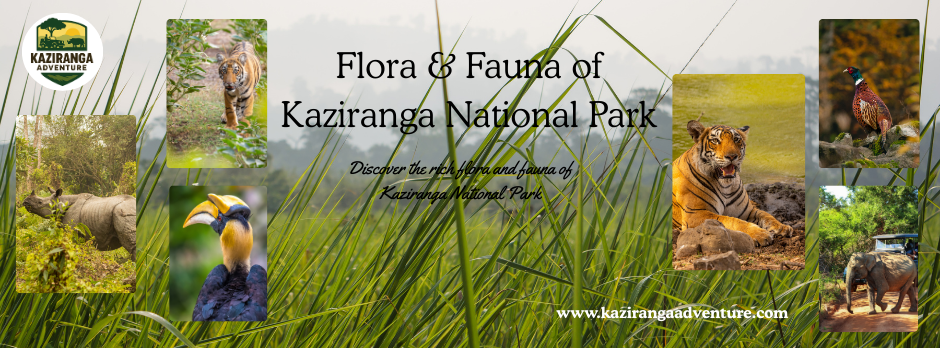
Nestled in the heart of Assam, Kaziranga National Park is renowned for its exceptional conservation success and incredible biodiversity. Declared a UNESCO World Heritage Site, Kaziranga’s landscapes — shaped by the Brahmaputra River’s flood pulses — create a dynamic ecosystem where both flora and fauna flourish. Whether you're an avid birder, a wildlife photographer, or simply an admirer of nature, Kaziranga promises an unforgettable experience.
To plan your safari and ensure you make the most of your visit, consider booking through a trusted operator: Kaziranga Adventure
Flora of Kaziranga National Park
Vegetation Types
Kaziranga’s plant life is broadly classified into four main vegetation types:- Alluvial inundated grasslands
- Alluvial savanna woodlands
- Tropical moist mixed deciduous forests
- Tropical semi-evergreen forests
Grasslands
- Tall “elephant” grass covers large expanses on higher ground.
- Short grasses dominate the lower plains, especially around wetlands or water bodies (beels).
- These grasslands are maintained by annual flooding, grazing by herbivores, and controlled burning, which keeps the habitat fertile and open.
- Common tall grasses include spear grass, sugarcane grass, and other reeds.
- Trees and Shrubs
- Scattered trees such as Bombax ceiba, Dillenia indica, Careya arborea, and Emblica officinalis are found in the grassland and woodland zones.
- In more forested areas, there are species like Aphanamixis polystachya, Syzygium species, Albizia procera, Duabanga grandiflora, Lagerstroemia speciosa, and more.
- Aquatic flora is quite rich too, with water lilies, lotus, and water hyacinth thriving in the park’s marshes and river banks.
- Climbing palms like rattan cane also add to the botanical diversity.
- Orchids
- A recent botanical survey documented 70 species of orchids across 36 genera in Kaziranga, including both epiphytic and terrestrial types.
- This highlights how rich and under-appreciated the park’s plant biodiversity is beyond its large mammals.
Fauna of Kaziranga National Park
Kaziranga is not just about its stunning plant life — the fauna here is equally spectacular.
- Mammals
- The park hosts around 35 mammalian species, of which about 15 are threatened.
- Its most iconic resident is the Greater One-Horned Rhinoceros, and Kaziranga is home to the world’s largest population of them.
- The “Big Five” of Kaziranga includes:
- Smaller and more elusive mammals include:
- Hispid hare, pangolins, sloth bears, jackals, moles, ferret badgers, civets, mongooses, and more.
- Primates are well represented: Assamese macaque, capped langur, golden langur, and even the Hoolock Gibbon (India’s only ape) inhabit the forest. Kaziranga Adventure Birds
- Kaziranga is also a birding paradise. According to surveys, hundreds of bird species (both migratory and resident) can be spotted here.
- The wetland zones and grasslands provide ideal habitat for waterfowl, waders, and many other birds.
- Reptiles, Amphibians & Aquatic Life
- 42 species of reptiles are recorded, including large snakes like the king cobra, reticulated python, and rock python.
- Turtles and tortoises are also present, notably the endangered Assam roofed turtle.
- Fish diversity is rich too, with 42 species reported in the park’s water bodies.
- Aquatic habitats are supported by plants like water lilies and lotus (as mentioned above), forming a complex interdependent ecosystem.
- Ecological Significance
- The park lies in a dynamic riverine floodplain formed by the Brahmaputra River, whose flooding cycles play a key role in maintaining the grasslands.
- This flooding, along with fire management, helps maintain the balance between open grassland and forest, which is critical for both herbivores and predators.
Importance & Conservation
- UNESCO Status: Kaziranga’s ecological and biological processes make it of “outstanding universal value.”
- Conservation Success: Through dedicated anti-poaching efforts and habitat management, Kaziranga has become a stronghold for endangered species like the one-horned rhino, tigers, and more.
Tourism & Safari: A well-planned safari gives visitors the opportunity to witness this biodiversity firsthand. To book your safari, you can use this safari booking portal: Kaziranga Adventure
- Visiting Tips: The best time to explore the park is during the dry season (typically November to April), when the floodwaters recede and wildlife is more visible.
Conclusion
Kaziranga National Park is not just a sanctuary for the majestic one-horned rhinoceros — it is a living testament to nature’s resilience and diversity. Its floodplain grasslands, dense forests, and water bodies support a tapestry of life, from orchids and grasses to predators and endangered mammals. A visit here, especially via a guided safari, offers a rare glimpse into one of India’s richest ecological landscapes. Plan your trip carefully by booking through trusted services like Kaziranga Adventure and immerse yourself in the wild wonder that is Kaziranga.