
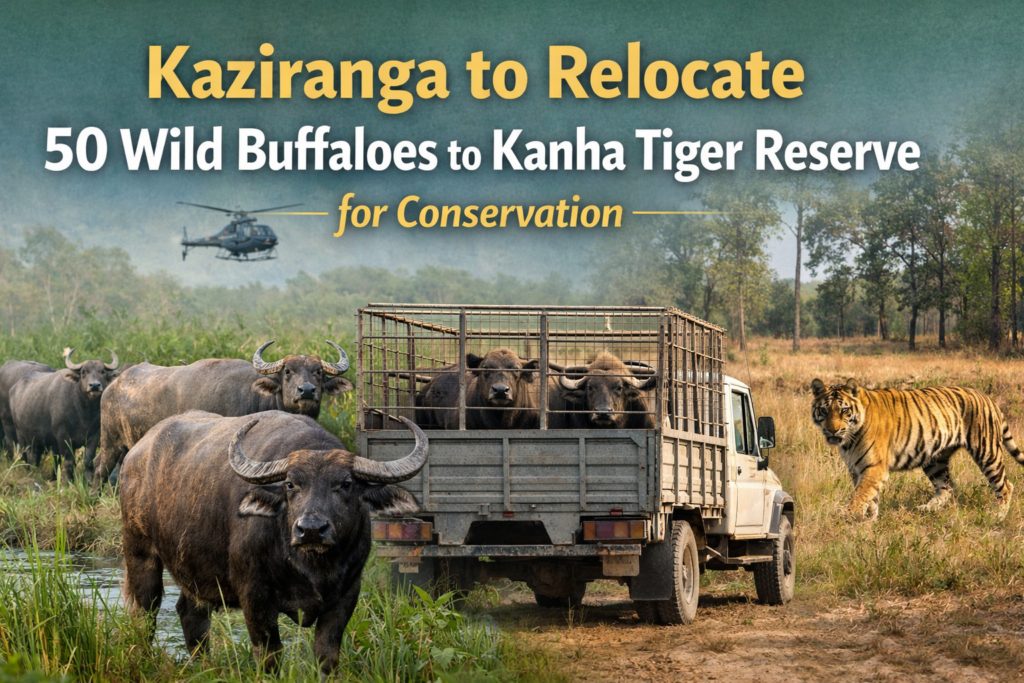
A major wildlife conservation initiative is underway as Kaziranga National Park and Tiger Reserve prepares to translocate around 50 wild buffaloes to Kanha Tiger Reserve in Madhya Pradesh. This step is part of a planned effort to strengthen the population of this important species in other forest regions of India.
The relocation will take place in a phase-wise manner, ensuring the safety of animals and the success of the conservation programme.
Phase-Wise Translocation Plan
According to forest officials, the first phase of the Kaziranga wild buffalo translocation project will involve around 15 Asiatic water buffaloes. However, instead of moving all 15 animals at once, authorities have decided to begin cautiously.
Initially, 5 to 6 buffaloes will be translocated to test the feasibility and success of the kaziranaga process. This step-by-step method will help experts understand how the animals adapt to the new environment in Kanha Tiger Reserve.
This careful planning highlights the importance of wildlife translocation in India for conservation purposes.
Capture and Preparation Process
The process of capturing wild buffaloes in Kaziranga National Park will begin on March 18 and 19. Forest teams will use tranquilization techniques to safely capture the animals without causing stress or injury.
Before the actual operation, authorities conducted a mock drill to ensure everything runs smoothly. This mock exercise involved members of the Wild Buffalo Translocation Implementation Committee, along with forest officials and veterinary experts.
Such preparation is essential in large-scale operations like translocation of wild buffaloes from Kaziranga to Kanha, where animal safety and coordination are critical.
Why Translocate Wild Buffaloes?
The decision to move buffaloes from Kaziranga National Park to Kanha Tiger Reserve is part of a broader conservation strategy.
Key reasons include:
- Reintroduction of species in forests where they once existed
- Reducing population pressure in Kaziranga
- Expanding habitat range of Asiatic water buffaloes
- Ensuring long-term species survival
Officials noted that Kanha Tiger Reserve had wild buffalo populations in the past. The reintroduction programme aims to restore this ecological balance.
This makes the project an important example of wildlife conservation through species relocation in India.
Strong Population in Kaziranga
Currently, Kaziranga National Park is home to over 1,000 Asiatic water buffaloes, making it one of the strongest populations of this species in the country.
Because of this healthy population, Kaziranga is considered an ideal source for such translocation programmes. Moving a small number of animals will not affect the overall population but will help establish new groups in other reserves.
Visitors on a Kaziranga Safari often spot large herds of Asiatic water buffaloes, reflecting the park’s thriving population of over 1,000 individuals
Learning from Past Translocations
India has already seen similar conservation efforts in the past. For example, wild buffaloes from Manas Tiger Reserve were successfully translocated to forests in Chhattisgarh.
These earlier projects provide valuable experience and confidence for the current Kaziranga to Kanha 50 wild buffaloes relocation programmed.
Role of Experts and Authorities
The translocation process is being managed by a team of wildlife experts, forest officials, and conservation authorities. The involvement of the 50 Wild Buffaloes Translocation Implementation Committee ensures that scientific methods and best practices are followed.
From capturing and transporting animals to monitoring their adaptation, every step is carefully planned. This highlights the growing importance of scientific wildlife management in Indian national parks.
Also Read: Kanha Tiger Reserve to Receive Wild Buffaloes from Assam’s Kaziranga
Importance of Kanha Tiger Reserve
Kanha Tiger Reserve is one of India’s most famous wildlife reserves, known for its rich biodiversity and successful conservation programmes.
By introducing Asiatic 50 wild buffaloes, authorities aim to:
- Increase biodiversity
- Restore natural ecosystems
- Strengthen prey base for predators
- Improve ecological balance
This makes the project beneficial not only for buffaloes but also for the overall forest ecosystem.
A Step Toward Stronger Wildlife Conservation
The translocation of 50 wild buffaloes from Kaziranga to Kanha Tiger Reserve is a significant step in India’s wildlife conservation journey. It shows how different national parks can work together to protect and expand species populations.
Such initiatives also highlight the importance of inter-state wildlife conservation projects in India, where cooperation between states plays a key role.
Conclusion
The planned relocation of Asiatic water 50 wild buffaloes from Kaziranga National Park to Kanha Tiger Reserve is a well-planned and important conservation move. With careful execution, scientific monitoring, and phased implementation, the project is expected to contribute significantly to the long-term survival of the species.
As India continues to focus on wildlife protection, projects like this demonstrate how strategic translocation and habitat expansion can help maintain ecological balance and protect endangered species for the future.