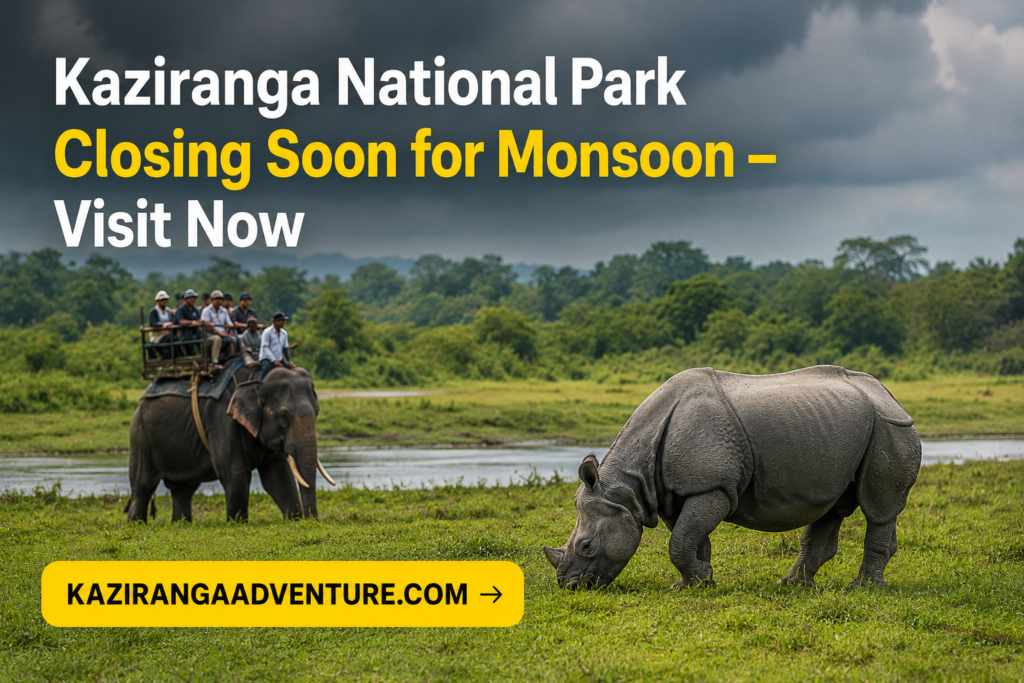
The countdown has begun. Every year around mid-May, one of India’s most iconic wildlife destinations quietly shuts its gates for the season and 2026 is no different. Kaziranga National Park closes for the monsoon in May, and the window to experience its magic before that happens is rapidly shrinking. If you have been thinking about visiting, this is not the time to delay.
When Will Kaziranga National Park Close for Monsoon in 2026?
Kaziranga National Park typically suspends gypsy safaris in mid-May each year, with elephant safaris ending even earlier around May 1. The exact closure date shifts slightly based on weather and road conditions inside the park, but the pattern is consistent once the monsoon arrives in Assam, the park closes immediately and does not reopen until October.
For the 2025-26 tourist season, gypsy safaris were suspended from May 31, 2025, following the arrival of the monsoon in Assam. Based on this pattern, the 2026 closure is expected in mid to late May 2026. Once closed, the entire park, all four safari zones remain inaccessible until mid-October 2026 at the earliest.
That means right now, in May 2026, you are in the final days of the current safari season. Do not wait another week.
Why Does Kaziranga Close for Monsoon?
The Brahmaputra River is at the heart of this. Every monsoon, heavy rainfall causes the Brahmaputra to overflow its banks, flooding large portions of the park’s floodplain habitat. Safari tracks become submerged and dangerous, making it physically impossible to run gypsy or elephant safaris safely. The closure also gives the park a vital ecological break: animals breed undisturbed, vegetation regenerates, and the habitat recovers fully before the next tourist season begins.
During the monsoon, animals migrate from the flooded grasslands to higher ground in the Karbi Hills, making wildlife sightings unreliable even if access were possible. The park closure is not a restriction, it is nature doing exactly what it is supposed to do.
Why Visiting Now Before Closure Is Worth It
April and May are genuinely special months at Kaziranga National Park, and they are deeply underrated by travellers who assume winter is the only good time to visit.
Here is what makes the pre-monsoon window so rewarding:
Wildlife is concentrated and visible. As water sources shrink and temperatures rise, animals gather in more predictable spots across all four safari zones. Rhino, tiger, elephant, wild water buffalo, and swamp deer sightings are strong during these final weeks. The park recorded its highest ever tourist footfall of over 4.43 lakh visitors in the 2024-25 season, a testament to just how rewarding a Kaziranga safari experience is throughout the open season.
The forest takes on a different character. Early monsoon drizzle in April gives the landscape a lush, misty quality that winter cannot offer. Wildlife photographs taken in this pre-monsoon light have a richness and warmth that make them stand out from typical dry-season shots.
Safari slots are still available but not for long. With the closing date approaching, permit availability drops fast. Every day closer to closure, the remaining slots across Kohora, Bagori, Agaratoli, and Burapahar ranges thin out quickly.
The Four Safari Zones — What to Expect Right Now
Kaziranga is divided into four main safari ranges. Each offers a distinct experience and all are currently open.
- Kohora Zone (Central Range) is the most popular and the best zone for both gypsy and elephant safari in Kaziranga. Wildlife sightings here are exceptional. Rhino, wild buffalo, swamp deer, and tiger sightings are consistently strong.
- Bagori Zone (Western Range) is renowned for grassland scenery and dense rhino populations. It is also one of the most productive zones for tiger sightings. Less crowded than Kohora, it gives you a more personal experience.
- Agaratoli Zone (Eastern Range) is quieter and ideal for those who want to avoid the peak-zone crowds. It also offers country boat rides on the Brahmaputra for Gangetic dolphin sightings, a rare and memorable addition to a safari trip.
- Burapahar Zone (Western Range) sits at higher elevation and is known for elephant herds, hoolock gibbons, and trekking trails. It is the most forested zone and the one that reveals a completely different side of Kaziranga beyond the famous grasslands.
What Wildlife You Can Still See Before Closure
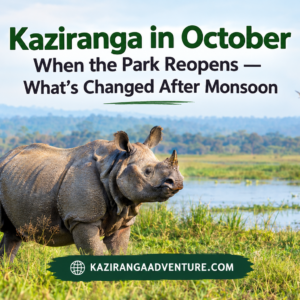
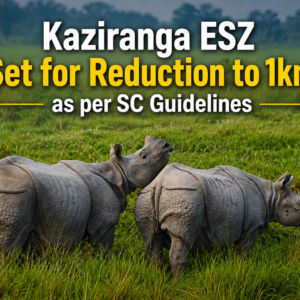
Kaziranga is home to the Big Five of Northeast India, the Indian one-horned rhinoceros, Royal Bengal tiger, Asian elephant, wild water buffalo, and eastern swamp deer. With an estimated 70 percent of the world’s remaining one-horned rhinos living inside this UNESCO World Heritage Site, spotting one is almost guaranteed on any safari.
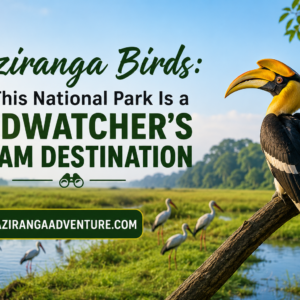
Tigers are present in significant numbers, well over 100 individuals recorded across the reserve. Spotting one requires patience and a skilled naturalist, but the odds here are better than most people expect. Over 500 bird species have been recorded in the park, including the Great Indian Hornbill, pelicans, and the endangered Bengal Florican. Birdwatching in April remains excellent with both resident and late-staying migratory species still present.
How to Book Your Kaziranga Safari Before It Closes
Safari permits for Kaziranga are issued zone-wise in limited numbers per session. With only days left in the current season, availability is tightening fast. Both gypsy safaris and elephant safaris can be booked through kaziranga online safari booking websites, which offers real-time availability across all zones, gypsy and elephant safari options, tour packages, and hotel accommodations near the park.
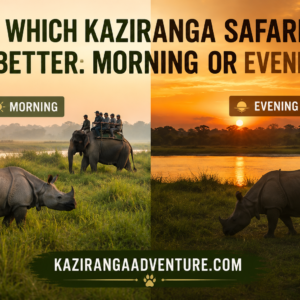
Morning safaris are the most productive, starting as early as 5:00 AM for elephant rides and around 7:00 AM for gypsy safaris. Evening gypsy safari slots start at 1:30 PM. Both offer entirely different experiences of the forest and its wildlife.
Book now. Once the park closes in May 2026, the next opportunity to visit will be October 2026 at the earliest.
Frequently Asked Questions
Jeep safaris typically close in mid to late May. Elephant safaris stop earlier around May 1. The exact date depends on weather and park authority decisions.
Heavy rainfall floods the park’s grasslands via the Brahmaputra River, making safari tracks unsafe. The break also protects wildlife during the breeding season.
The park usually reopens in mid-October, though in some years it has opened as early as October 1 ahead of Durga Puja.
Absolutely. Wildlife concentrates near water sources in these final weeks, making rhino and tiger sightings stronger than at any other time of the year.
Four Kohora, Bagori, Agaratoli, and Burapahar. Each zone has its own landscape, wildlife density, and experience.
Yes. April is excellent for birding with over 500 recorded species and late-season migratory birds still present across the park.
Yes. With nearly 70 percent of the world’s one-horned rhino population living here, a sighting is almost guaranteed in the Kohora or Bagori zones.
Conclusion
Kaziranga National Park is not a destination you can visit whenever it suits you. It has a season, and that season is ending very soon. Once the monsoon closes the gates in May 2026, the next opportunity to experience this UNESCO World Heritage Site does not arrive until October 2026, a wait of nearly five months.
The weeks before closure are genuinely some of the finest days to be inside the park. Wildlife is active, sightings are strong, the landscape is alive, and the atmosphere carries that rare sense of urgency that only end-of-season travel brings. Whether this is your first Kaziranga safari or your fifth, the experience right now is worth every effort to make it happen.