Every year, Kaziranga National Park goes quiet. May hits, the Brahmaputra starts rising, and before long the roads are under water and the forest has essentially shut itself off. No safaris running, no gypsies, no visitors. Just the park doing what it does when humans leave it alone.
Then October comes, and the park wakes up again.
For anyone who has been waiting to visit, October is when things actually start moving. Gates open, zones become accessible, and the whole place looks nothing like the dry months that came before the rains.
Planning a trip this season and not sure what to expect? Here is a proper breakdown of what visiting Kaziranga in October actually looks like.
Why Kaziranga Closes Every Monsoon
The park sits on the Brahmaputra’s floodplains — that is just its geography. When the monsoon arrives, a big chunk of the park goes underwater. What were safari trails became waterlogged. Animals push toward higher ground to wait it out. Sending tourist vehicles through any of that would be genuinely dangerous, not to mention harmful to wildlife that is already stressed by the flood conditions.
So around May the park shuts. It stays shut through the monsoon months. No human presence, no vehicles, nothing — the land just gets left to itself completely. By October, when the waters finally start pulling back, what you walk into is a landscape that has been untouched for months. Raw, damp, and more alive than most people expect.
When Does Kaziranga Reopen After Monsoon
Around October 1 is the standard reopening, though it shifts depending on how bad the flooding was and how quickly conditions settle afterward. Some years certain zones are still clearing when others are already running safaris.
The zones that tend to open first are Kohora (Central Range), Bagori (Western Range), and Burapahar. Agaratoli — the Eastern Range — usually follows once roads are confirmed passable and everything is cleared properly.
If early October is when you are going, check which zones are actually operational before you lock in your dates. Do not assume all four are running from day one.
What the Park Looks Like in October
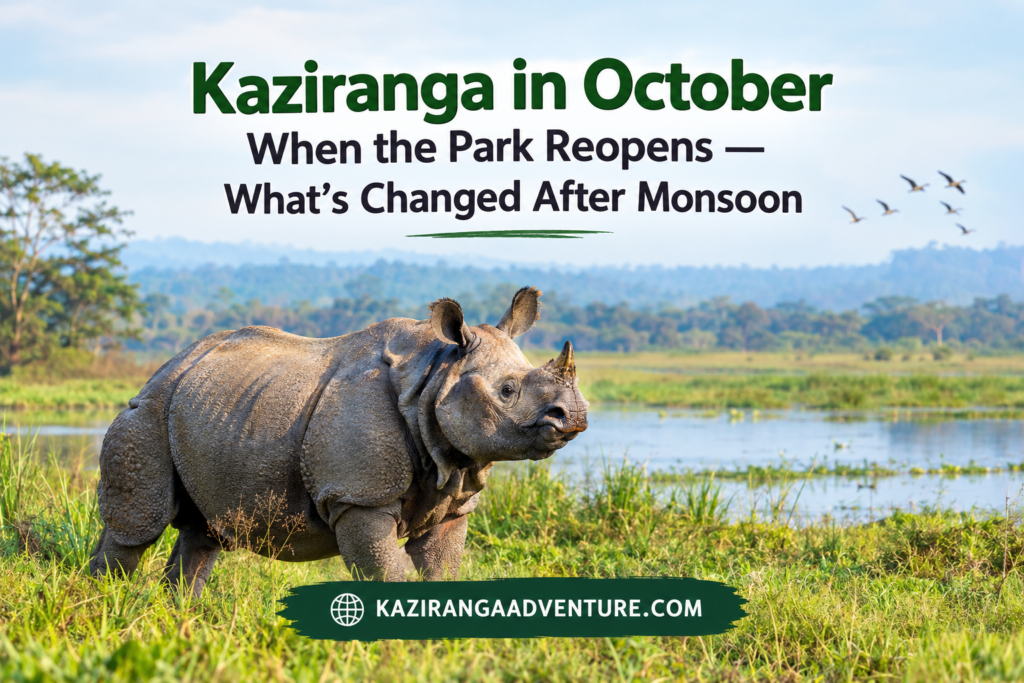
Most people are not prepared for how the park actually looks in October, and that is on them for not asking. The grasslands are deep green. Tall — chest-high in stretches. The beels, the natural lakes and water bodies scattered through the park, are still full from the rains. There is a smell to the place that is hard to pin down but immediately feels different from any wildlife park you have visited in the dry season.
Months of water sitting across the floodplains means soil is rich and vegetation is dense. The elephant grass Kaziranga is known for — that is at its thickest right now. Rhinos, elephants, buffalo, all moving slowly through it. Early morning mist sitting over everything. The kind of thing you do not really get to describe accurately later.
Yes, tall grass means some sightings are harder than they would be in January. That is real and worth knowing. But it also means you are seeing the park in a state most visitors never catch. That trade-off is part of what makes October worth going.
Which Safari Zones Open First in October
- Kohora Zone (Central Range) is where most people begin. It is the most accessible zone, sits closest to the highway, and delivers consistent sightings — one-horned rhinos, wild elephants, swamp deer. First-time visitor who wants a dependable start? Kohora is the answer.
- Bagori Zone (Western Range) is where rhino sightings tend to concentrate. The waterholes pull animals in steadily, and it is not unusual to find rhinos, buffalo, and deer all near the same water body at the same time. Good zone to prioritize if rhinos are the main draw.
- Burapahar Zone is its own thing entirely. Further west, closer to Guwahati, hilly and forested rather than open grassland. Hoolock Gibbons are here, hornbills, forest species you will not see in the other zones. Walking treks are allowed here too, which breaks up the gypsy safari routine nicely.
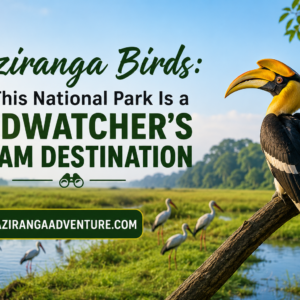
- Agaratoli Zone (Eastern Range) is the birdwatcher’s pick without much debate. Wetlands and grassland combination, Greater Adjutant Stork, Brahminy Duck, Fishing Eagle — October is actually a strong month here because migratory birds start showing up around this time.
Gypsy Safari Timing in October at Kaziranga
The morning slot runs from around 7:30 AM. Afternoon from around 1:30 PM. Morning wins — softer light, more animal activity, mist still sitting over the grassland when you enter. Afternoon has its moments but morning is the one worth protecting in your schedule.
Early October specifically — timings can shift slightly while authorities are still adjusting to road and weather conditions post-monsoon. Confirm exact timings when you book, do not assume they are fixed.
Is Elephant Safari Available in October
Elephant safari inside the park generally opens from November. In October, particularly the first few weeks, gypsy safari is what is running. If elephant safari is specifically what you are after, November onwards is when that becomes available at Kohora and Bagori zones.
Wildlife You Can Spot in October
Sightings in October are genuinely good even with the taller grass — just different from what you get in winter.
One-horned rhinos are out across the open grasslands, especially near beels in the mornings and late afternoons. Kohora and Bagori are your strongest zones for this.
Royal Bengal tigers are present across all zones but the dense October vegetation makes them harder to spot. The Central Zone gives you a better shot than most. Early morning is your window.
Asian elephants are very active in October — they spent the flood months on higher ground and are now moving back into the floodplains. Herds are on the move.
Wild water buffalo cluster near waterholes in Bagori Zone fairly reliably.
Swamp deer, hog deer, other herbivores — consistent across all zones throughout the month.
Birds — October is excellent. Migratory birds are arriving, wetlands are full, Agaratoli Zone specifically is worth a dedicated safari if birding is your thing.
What Has Changed After Monsoon
The park looks different but there are also practical things to know before you go.
Interior trail conditions take time to fully recover after the floods. Some paths may still be muddy or restricted depending on how the season went. The forest department spends September working on clearing safari routes, but early October visitors will likely find fewer accessible trails than peak winter season offers. It is not a dealbreaker — just something to factor in.
Animal distribution has shifted too. Rhinos and elephants that moved toward the Karbi Anglong hills during peak flooding gradually return to the floodplains through October. What that means practically is that sightings improve as the month progresses. Late October is noticeably better than first week October for this reason.
The crowd situation is also genuinely different. October numbers are thin compared to December or January. Fewer vehicles sharing the trails, less noise, more space between you and the next gypsy. If a quieter, more unhurried safari appeals to you, that is exactly what October delivers.
How to Plan Your Visit to Kaziranga in October
Safari booking — do it early, especially around Durga Puja. That holiday window in early October pulls a lot of visitors and slots go fast. Do not leave this for the last week before your trip.
Stay near Kohora, the Central Range area, for the most straightforward access to the main zones. Hotels and resorts along the highway here put you within a few minutes of the gate.
Two full safari days minimum — one morning slot, one afternoon. Each gives you a genuinely different read on the park.
Carry something light and warm for early mornings. October in Kaziranga is not cold exactly, but pre-sunrise hours inside the forest feel cool. 5 AM to 7 AM especially — a layer helps.
FAQs\
Around October 1 each year, subject to flood conditions and road clearance.
Kohora, Bagori, and Burapahar usually open first. Agaratoli follows once conditions are fully clear.
Yes. The park is freshly open, vegetation is lush, wildlife is active, crowds are a fraction of what they are in December or January.
Elephant safari inside the park typically starts from November. October runs gypsy safaris only.
Morning around 7:30 AM, afternoon around 1:30 PM. Early October timings may vary slightly — confirm when booking.
Two to three nights covers multiple zones comfortably and lets you do both safari slots across your stay.
Yes — Durga Puja period especially. Slots fill quickly during that window.
Yes. Rhinos, elephants, buffalo, deer near water bodies and open stretches are consistent sightings. Different from clear winter views but absolutely active.
Conclusion
October at Kaziranga is not what most people picture when they think of visiting. December and January get all the attention — grass cut short, rhinos practically roadside, parks packed with visitors who planned six months ahead.
October is none of that. The grass is tall, the park just reopened, animals are still finding their rhythm after months of flood displacement. You are often one of a handful of gypsies out at sunrise. That kind of morning does not happen in peak season.
If the trade — a bit of grass cover for a lot more atmosphere and a lot fewer people — sounds like something you would take, then October is the month. Book the safari before Durga Puja fills the slots, pick the zone that matches what you want to see, and go in on the morning shift.