Planning a wildlife trip from Delhi to Kaziranga National Park is an exciting experience for nature lovers and adventure seekers. Located in the beautiful state of Assam in Northeast India, Kaziranga is one of the most famous wildlife destinations in the country. The park is globally known for its large population of the endangered one-horned rhinoceros and rich biodiversity.
If you are looking for a Kaziranga National Park travel guide from Delhi, this article will help you understand how to plan the journey, the best travel routes, safari options, and the ideal time to visit.
Why Visit Kaziranga National Park
Kaziranga National Park is a UNESCO World Heritage Site and one of the best wildlife conservation areas in India. Spread across vast grasslands, wetlands, and forests along the Brahmaputra River, the park provides a perfect habitat for many wildlife species.
Some of the major animals found here include:
- Indian one-horned rhinoceros
- Bengal Tiger
- Asian Elephant
- Wild water buffalo
- Swamp deer
- Leopards
- Wild boar
Because of its rich biodiversity, Kaziranga is considered one of the best wildlife safari destinations in India.
Best Time to Visit Kaziranga National Park From Delhi
The best time to visit Kaziranga National Park from Delhi is between November and April. During these months, the weather is pleasant and wildlife sightings are more frequent.
Season guide:
Winter (November – February)
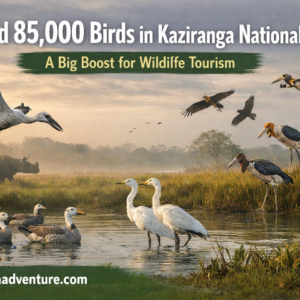
Perfect for wildlife safaris and birdwatching. Migratory birds arrive during this time.
Spring (March – April)
Good chances of spotting animals near water bodies.
The park usually remains closed during the monsoon season from May to October due to flooding caused by the Brahmaputra River.
How to Reach Kaziranga from Delhi
Traveling from Delhi to Kaziranga National Park is easy with multiple transport options.
By Air
The fastest way is by flight.
Fly from Indira Gandhi International Airport in Delhi to Lokpriya Gopinath Bordoloi International Airport in Guwahati.
From Guwahati, Kaziranga is around 220 km away and takes 4–5 hours by road.
This is the most convenient option for travelers planning a Delhi to Kaziranga trip.
By Train
You can also take a train from Delhi to Furkating Junction, which is the nearest railway station to Kaziranga.
From the station, taxis and local transport are available to reach the park.
By Road
Adventurous travelers sometimes combine road trips with flights or trains. The drive from Guwahati to Kaziranga National Park offers beautiful views of tea gardens, villages, and forests.
Safari Experience in Kaziranga
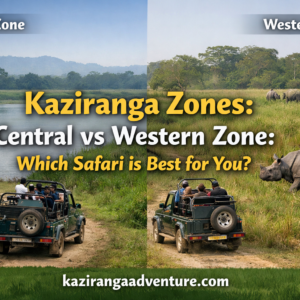
A safari is the highlight of visiting Kaziranga National Park. The park is divided into four major safari zones:
- Central Range (Kohora)
- Western Range (Bagori)
- Eastern Range (Agaratoli)
- Burapahar Range
Each zone offers a different wildlife experience.
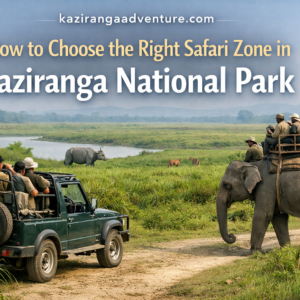
Jeep Safari
The Kaziranga jeep safari is the most popular way to explore the park. Visitors travel in open vehicles with trained drivers and guides.
During the safari, you can often see rhinos grazing in the tall grasslands, elephants moving in herds, and deer running through the forest.
Elephant Safari
Another unique experience is the Kaziranga elephant safari, which usually takes place early in the morning. Riding on an elephant allows visitors to move quietly through the tall grasslands and observe rhinos from a closer distance.
Where to Stay Near Kaziranga
Most accommodation options are located near the Kohora range, the main tourist area of the park.
You can choose from:
- Budget hotels
- Mid-range resorts
- Luxury eco lodges
- Government forest lodges
Many resorts provide traditional Assamese food and guided tours, making your Kaziranga wildlife trip more memorable.
Things to Do Near Kaziranga
Apart from safaris, visitors can also explore nearby attractions:
- Tea gardens of Assam
- Local Assamese villages
- Cultural dance performances such as Bihu
- Birdwatching in wetlands around the park
These experiences help travelers understand the local culture and environment of Northeast India.
Travel Tips for a Kaziranga Trip from Delhi
If you are planning a Kaziranga National Park trip from Delhi, keep these tips in mind:
- Book safari permits in advance
- Carry binoculars and a camera
- Wear neutral colored clothes like green or brown
- Start safaris early morning for better wildlife sightings
- Follow park rules and respect wildlife
Importance of Wildlife Conservation in Kaziranga
Kaziranga National Park is considered one of the greatest conservation success stories in India. Strict protection and wildlife monitoring have helped increase the population of the endangered one-horned rhinoceros.
Forest guards and local communities work together to protect animals from poaching and preserve the natural ecosystem. Because of these efforts, Kaziranga continues to be one of the most important wildlife habitats in Asia.
Final Thoughts
A trip from Delhi to Kaziranga National Park is an unforgettable journey into the wild. From thrilling jeep safaris to peaceful landscapes filled with wildlife, the park offers a unique experience for travelers.
Whether you are a wildlife photographer, a nature lover, or someone seeking adventure, planning a perfect trip to Kaziranga National Park from Delhi will give you memories that last a lifetime.
If you enjoy exploring India’s wildlife destinations, Kaziranga should definitely be on your travel bucket list.
FAQ
The easiest way is to fly from Indira Gandhi International Airport in Delhi to Lokpriya Gopinath Bordoloi International Airport in Guwahati and then travel by road to Kaziranga, which takes around 4–5 hours.
A 3–4 day trip is usually ideal to explore Kaziranga National Park, enjoy multiple safaris, and experience the wildlife and natural landscapes.
The Central Range (Kohora) is the most popular zone because it offers good chances of spotting the one-horned rhinoceros and other wildlife.
Yes, it is recommended to book jeep or elephant safaris in advance, especially during peak tourist months between November and February.
Visitors often see the one-horned rhinoceros, deer species, wild buffalo, elephants, and sometimes the Bengal Tiger during safaris.