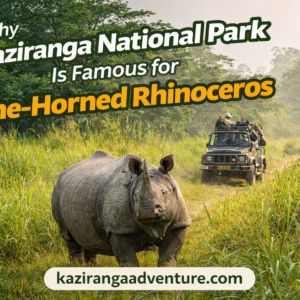

Nestled along the fertile Brahmaputra floodplains ecosystem in Assam, Kaziranga National Park has long been celebrated as a global conservation icon and a Kaziranga UNESCO World Heritage Site. Famous worldwide for its one-horned rhinoceros, the park is now gaining equal recognition as a high-density tiger reserve in India, firmly establishing itself as a stronghold for Royal Bengal Tigers in Kaziranga, including the exceptionally rare Golden Tiger Kaziranga.
A Landscape Shaped for Survival
The unique geography of Kaziranga Wildlife Sanctuary—marked by tall elephant grass, marshlands, riverine forests, and seasonal wetlands—creates an ideal tiger habitat in Assam. Annual floods from the Brahmaputra River, once seen as a challenge, now play a crucial ecological role. They rejuvenate grasslands, sustain prey populations, and maintain biodiversity, explaining why Kaziranga is becoming a tiger haven for large carnivores.
Rise in Kaziranga Tiger Population
Over the last decade, the Kaziranga tiger population has shown consistent growth, placing the park among the most successful Indian tiger reserves. Strategic conservation planning, strict anti-poaching enforcement, and continuous monitoring through camera traps have strengthened tiger conservation in Kaziranga. The abundance of prey species such as swamp deer and wild buffalo supports one of the highest tiger densities recorded anywhere in the world, as reflected in the Kaziranga National Park tiger census.
The Mystery of the Golden Tiger
Among the park’s most extraordinary inhabitants is the rare golden tiger in India, a genetic variant of the Royal Bengal Tiger caused by a recessive gene. Known for its pale golden coat and faint stripes, the golden tiger has become a symbol of Kaziranga’s genetic richness. Occasional golden tiger sightings in Kaziranga National Park have captivated wildlife enthusiasts and scientists alike, reinforcing the park’s importance as a stable and thriving tiger landscape.
Conservation Efforts and Community Support
Kaziranga’s achievements represent a powerful conservation success story of Kaziranga. Forest officials, conservationists, and local communities work together to safeguard wildlife while promoting sustainable livelihoods. Ecotourism initiatives have strengthened Assam wildlife tourism, turning conservation into a shared responsibility. These efforts align closely with national initiatives such as Project Tiger success stories, further enhancing protection for the Royal Bengal tiger habitat in Assam.
From Rhino Land to Tiger Stronghold
While the one-horned rhino remains the park’s iconic emblem, Kaziranga’s evolution into a tiger sanctuary marks a significant milestone. The coexistence of rhinos and tigers highlights the success of preserving a one-horned rhino and tiger habitat within the same protected landscape. This transformation underscores Kaziranga’s growing stature as a premier destination for wildlife conservation and ecological balance.
A Golden Future Ahead
Kaziranga’s golden legacy extends beyond rare tiger sightings or rising numbers. It stands as living proof that strong protection, scientific management, and community participation can secure the future of endangered species. As Royal Bengal Tigers in Kaziranga continue to thrive, the park shines as a beacon of hope for wildlife conservation in India and across the world.