
Exploring the Rich Forests, Grasslands, and Wetlands of Kaziranga National Park
Kaziranga National Park, nestled in Assam, India, is world-famous for its one-horned rhinoceros and diverse wildlife. Equally remarkable is the flora of Kaziranga National Park, which forms the backbone of this thriving ecosystem. From dense tropical forests and sprawling grasslands to sparkling wetlands, Kaziranga offers an unparalleled experience for botanists, nature enthusiasts, and wildlife lovers.
The plant life in Kaziranga is essential for maintaining the park’s delicate ecological balance. It sustains the food chain, prevents soil erosion, regulates water cycles, and provides shelter for countless species. This comprehensive guide explores the plants and trees in Kaziranga, highlighting their ecological importance, seasonal variations, rare and endangered species, and ongoing conservation efforts that protect these lush landscapes.
To explore Kaziranga and experience its incredible flora firsthand, visitors can check out Kaziranga Adventure
Introduction to Kaziranga’s Flora
Kaziranga is located along the fertile floodplains of the Brahmaputra River, a feature that contributes to its extraordinary biodiversity. The park includes dense forests, expansive grasslands, marshes, and wetlands, each creating unique habitats for wildlife. The wildlife habitats in Kaziranga rely heavily on its plant diversity, which supports herbivores, predators, and migratory birds alike.
Deep-rooted trees like Sal (Shorea robusta) play a vital role in anchoring the soil and preventing erosion during the heavy monsoon rains of Kaziranga National Park. Wetland plants regulate water levels and preserve essential nutrients, ensuring the health of the park’s aquatic ecosystems. Grasses, shrubs, and bamboo provide nourishment and shelter for rhinos, swamp deer, elephants, and smaller mammals, supporting diverse wildlife habitats. Meanwhile, aquatic vegetation sustains fish, amphibians, and waterbirds, maintaining the balance and resilience of Kaziranga’s interconnected forests, grasslands, and wetlands.
The flora of Kaziranga National Park is more than scenery—it is a vital component of life in the park and a cornerstone for maintaining ecological stability in this UNESCO World Heritage Site.
Forests of Kaziranga
The forests of Kaziranga are primarily tropical moist deciduous with pockets of semi-evergreen vegetation. They form the backbone of the park’s ecosystem, offering shelter, food, and breeding grounds for countless species.
Major Tree Species
Sal trees dominate the forest and provide both nourishment and refuge for deer, monkeys, and various bird species. Teak (Tectona grandis) is vital for forest structure, while Indian elm (Holoptelea integrifolia) grows along riverbanks, providing habitats for smaller creatures. Ficus species act as keystone trees, their fruits feeding birds, primates, and other mammals year-round.
Rare and Medicinal Plants
The forests of Kaziranga National Park shelter a variety of rare and medicinal plants, such as colorful orchids, wild ginger species, and unique shrubs, all of which enhance the park’s rich botanical diversity and ecological significance. Many of these plants are traditionally used by local communities for medicine, rituals, and nutrition. The dense forest canopy prevents excessive sunlight from reaching the floor, creating the perfect environment for these species to thrive.
Ecological Functions of Forests
The forests regulate the microclimate, keeping the ground cool and moist. Decomposing leaves enrich the soil, supporting a complex web of organisms. Forests create microhabitats for insects, reptiles, amphibians, and mammals, enhancing overall biodiversity and maintaining ecological balance.
Grasslands of Kaziranga
The park’s grasslands are equally important, forming the primary habitat for herbivores like rhinos, swamp deer, elephants, and wild buffalo. Kaziranga grasslands and wetlands cover a significant portion of the park and vary in density, height, and species composition.
Key Grassland Vegetation
Elephant grass offers grazing and shelter for herbivores, while reeds and sedges provide nesting sites for birds and protective cover for small mammals. Bamboo patches serve as both food and a soil stabiliser. Seasonal flooding replenishes nutrients, keeping the grasslands fertile and maintaining their ecological functions.
Grasslands and Fire Ecology
Grasslands play a role in natural fire ecology. Controlled burns and seasonal fires encourage fresh growth, prevent woody plant encroachment, and maintain biodiversity. These open habitats allow large herbivores to graze and predators to hunt, forming a dynamic ecosystem integral to Kaziranga’s health.
Wetlands and Aquatic Plants
Wetlands scattered across Kaziranga are another vital component of its rich flora. Aquatic plants in Kaziranga National Park provide essential habitats for fish, amphibians, and waterbirds, while crucially helping to sustain the hydrological balance and overall health of the park’s wetlands.
Wetland Plants in Kaziranga National Park
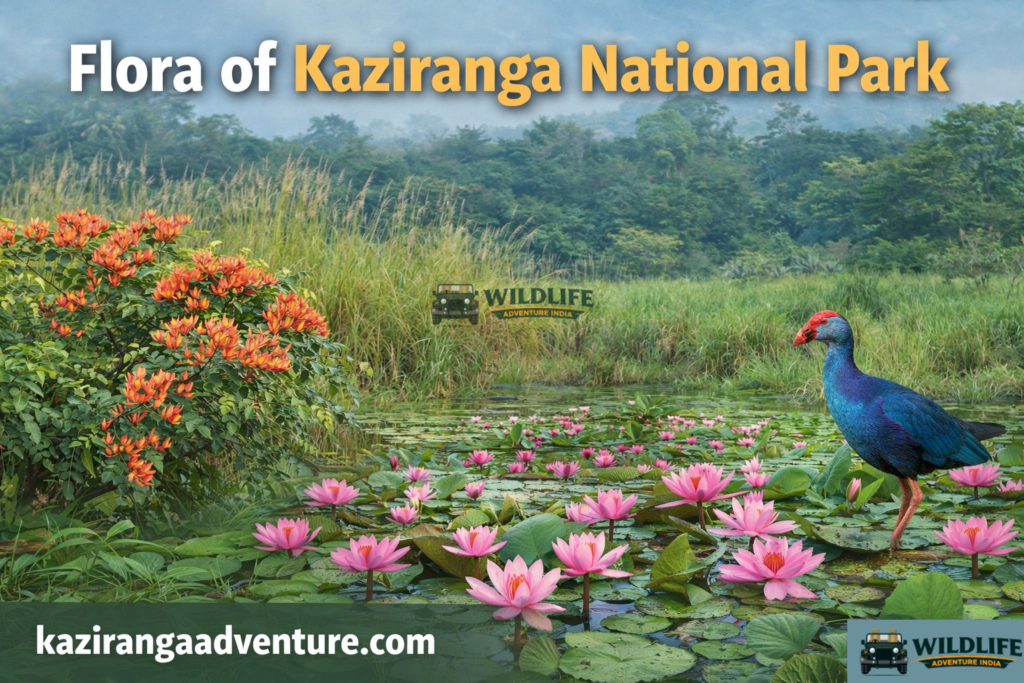
Kaziranga’s wetlands are home to a diverse range of aquatic vegetation that plays a crucial role in maintaining the park’s ecosystem. Lotus (Nelumbo nucifera) blooms in shallow water, adding both aesthetic beauty and providing shelter for fish, amphibians, and other aquatic life. Water hyacinth (Eichhornia crassipes), although invasive, offers temporary cover for smaller fish and supports aquatic biodiversity. Marsh grasses, reeds, and other wetland vegetation help stabilise riverbanks, prevent soil erosion, and maintain the health of Kaziranga grasslands and wetlands. Together, these aquatic plants in Kaziranga create a thriving habitat for migratory birds, amphibians, and wetland-dependent wildlife.
Ecological Importance of Wetlands
Wetlands act as biodiversity hotspots. Migratory birds arrive in large numbers, fish and amphibians thrive, and vegetation purifies water while absorbing excess rainwater during monsoon floods. These wetlands are indispensable for sustaining both terrestrial and aquatic life.
Rare and Endangered Plant Species
Kaziranga is home to several rare plants in Kaziranga, many of which are endangered and hold ecological, medicinal, and cultural importance. Orchids bloom during the monsoon in shaded forest areas, adding colour and attracting pollinators. Medicinal herbs have been sustainably harvested by local communities for generations.
Preserving these species is crucial for biodiversity, maintaining food chains, and protecting Assam’s cultural heritage. Conservation ensures Kaziranga remains a living laboratory for research, education, and sustainable ecological practices.
Seasonal Changes in Kaziranga Flora
The seasonal flora of Kaziranga undergoes remarkable changes throughout the year.
- Monsoon (June–September): Forests and grasslands flourish, rivers overflow, and migratory birds arrive.
- Winter (October–February): Some trees shed leaves, and wildlife activity increases as animals seek food and water.
- Summer (March–May): Grasslands are partially dry, but hardy trees and wetland plants continue supporting life, preparing for the next monsoon cycle.
These seasonal dynamics influence animal behaviour, breeding, and feeding patterns, highlighting the interconnectedness of plants and wildlife.
Human Interaction and Ethnobotany
Local communities have long relied on Kaziranga’s plants for sustenance, medicine, and tools. Bamboo and reeds are used for mats, baskets, and furniture. Medicinal herbs help treat common ailments such as fever, wounds, and digestive issues. Fruit-bearing trees supplement human diets and provide food for wildlife.
This ethnobotanical knowledge demonstrates the close connection between people and the flora of Kaziranga National Park, emphasising the importance of sustainable practices for both humans and nature.
Conservation of Kaziranga’s Plant Life
Protecting the flora is as important as conserving Kaziranga’s famous wildlife. Key conservation measures include:
- Regular monitoring by the forest department.
- Controlling invasive species like water hyacinth.
- Reforestation with native trees and grasses.
- Educational programmes for visitors and local communities.
These initiatives ensure that the park remains a thriving biodiversity hotspot and preserves the ecological resilience of the region for future generations.
Tips for Exploring Kaziranga Flora
Visitors can enhance their experience by:
- Join guided botanical tours to discover rare and medicinal plants.
- Birdwatching in areas where specific vegetation attracts unique species.
- Photography of seasonal changes in forests, grasslands, and wetlands.
- Respecting nature by avoiding plant collection or disturbing habitats.
Conservation includes forest monitoring, controlling invasive plants, reforestation with native species, and educational programmes. These efforts preserve rare plants, maintain biodiversity, and support wildlife habitats for future generations.
During the monsoon, forests and grasslands flourish, and migratory birds arrive. In winter, some trees shed leaves, and wildlife activity increases. Summer sees partially dry grasslands, but hardy trees and wetland plants continue to support life.
The flora sustains wildlife by providing food, shelter, and habitats. Trees prevent soil erosion, wetlands manage water, and forests create microhabitats for insects, reptiles, and mammals, maintaining ecological balance.
Kaziranga has diverse plant life, including tropical moist deciduous forests, semi-evergreen patches, grasslands, and wetlands. Key trees include Sal, Teak, Indian Elm, and Ficus, while grasslands have elephant grass, reeds, and bamboo.
Yes, Kaziranga is home to several rare and endangered species, including orchids, medicinal herbs, and unique aquatic plants. These species are important for biodiversity, traditional medicine, and maintaining ecological balance.
Absolutely. Visitors can take guided botanical tours, enjoy birdwatching in grasslands and wetlands, and photograph seasonal landscapes. Responsible exploration ensures the plants and habitats remain protected while offering an educational experience.
Conclusion
The flora of Kaziranga National Park is the lifeblood of its ecosystem. Forests, grasslands, and wetlands work in harmony, supporting wildlife, regulating the environment, and sustaining biodiversity. Experiencing Kaziranga’s lush landscapes is both educational and visually captivating, offering insights into how plants shape ecosystems and influence wildlife behaviour.
Appreciating the plants and trees in Kaziranga strengthens our connection to nature and underscores the need for ongoing conservation, ensuring that this natural paradise continues to thrive for generations to come.