Kaziranga National Park in Kaziranga, Assam, India, is a rare and dynamic landscape where rivers, grasslands, wetlands, and forests blend into one of the most productive wildlife habitats on Earth. Recognised as a UNESCO World Heritage Site, Kaziranga is shaped and renewed each year by the life-giving floods of the Brahmaputra River. Unlike many places where floods bring destruction, here they bring regeneration. These seasonal waters deposit fertile silt across the plains, nourish wetlands and marshes, and sustain the towering ecosystem of tall elephant grass that defines the sanctuary.
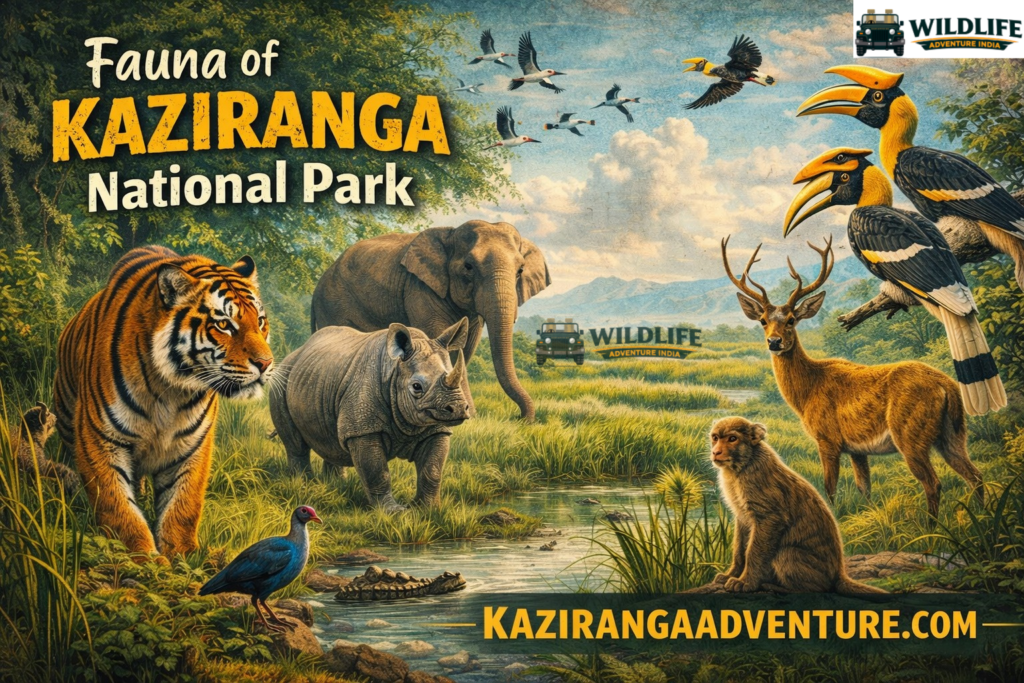
This ever-renewing floodplain allows the fauna of Kaziranga National Park in Assam, India, to flourish in exceptional abundance and diversity. From giant herbivores grazing in open grasslands to elusive predators hidden in thick reeds, from migratory birds filling the skies to reptiles basking along muddy banks, every form of life finds a place in this thriving ecosystem.
Kaziranga stands today as a living symbol of the importance of Kaziranga in Indian wildlife conservation. It demonstrates how well-managed protection, strict monitoring, and ecological understanding can revive endangered species and restore natural balance. The park is internationally known for the rare and majestic wildlife found in the Kaziranga sanctuary, making it a dream destination for wildlife lovers, researchers, photographers, and nature enthusiasts from across the globe.
For travel guidance, park information, and safari planning, visit.
👉 Kaziranga Adventure
Landscape That Shapes Wildlife
The true magic of Kaziranga lies in its geography. The Brahmaputra River flows along the northern boundary of the park, and every year its waters overflow into the plains. When the floods recede, they leave behind fertile soil that encourages the rapid growth of grasses and aquatic plants. This fresh vegetation becomes the foundation of the entire food chain.
The landscape is a mosaic of tall elephant grass, open meadows, dense forests, shallow wetlands, and beels (oxbow lakes). Each of these habitats supports a different set of species, yet all are interconnected. Herbivores graze in the grasslands, predators stalk along wetland edges, birds nest near water bodies, and reptiles inhabit riverbanks and marshes.
This interconnected system explains why the fauna of Kaziranga National Park in Assam, India, is so rich, balanced, and resilient. The health of the land and water directly influences the survival of wildlife.
The Great Indian One-Horned Rhinoceros: Pride of Kaziranga
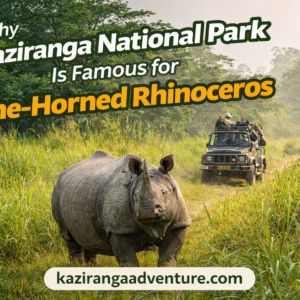
Kaziranga is globally celebrated as the best place to see one-horned rhinos in Kaziranga National Park. The Great Indian one-horned rhinoceros thrives in the grasslands and wetlands where food and water are abundant year-round. These massive mammals feed on elephant grass, reeds, and aquatic plants and often rest in muddy wallows to cool themselves.
At one time, rhinos were pushed close to extinction due to poaching and habitat loss. Today, they are among the most successful examples of endangered animals protected in Kaziranga National Park. Strict anti-poaching patrols, habitat conservation, and continuous monitoring have helped their population grow steadily.
Rhino sightings are frequent during safaris, making them the defining symbol of the rare and majestic wildlife found in the Kaziranga sanctuary.
Plan your safari here:
👉 Kaziranga Safari Booking
The Royal Bengal Tiger: Apex Predator of the Grasslands
Hidden deep within the tall elephant grasses and marshy fringes of Kaziranga National Park roams one of the most powerful and elusive predators of the Indian wilderness—the Royal Bengal tiger. Unlike the dense forests of other tiger reserves, Kaziranga offers a unique grassland and wetland habitat where tigers have adapted remarkably well to their surroundings. The thick reeds, water channels, and open meadows provide perfect camouflage and abundant hunting grounds, allowing the tiger population in Kaziranga to thrive quietly and efficiently.
Tigers in Kaziranga rely heavily on stealth. The tall grasslands act as natural cover as they stalk prey such as swamp deer, hog deer, sambar, and wild boar. Wetland edges and beels become strategic hunting zones where herbivores gather to drink water, unaware that a predator may be concealed nearby. This combination of vegetation, water, and prey availability creates one of the most suitable tiger habitats in India.
By regulating herbivore populations, they prevent overgrazing and ensure that grasslands regenerate continuously. Their presence strengthens the overall diversity of Kaziranga National Park’s flora and fauna and clearly explains why Kaziranga is famous for its rare wildlife species. Although actual sightings are rare due to dense vegetation, the knowledge that tigers roam freely adds an undeniable thrill to every safari experience in Kaziranga.
Asian Elephants and Wild Water Buffaloes
While tigers dominate the food chain, the true giants of Kaziranga’s landscape are the Asian elephants and wild water buffalo. These massive herbivores move gracefully through wetlands, grasslands, and forest patches, shaping the ecosystem with their daily activities.
Asian elephants travel in tightly knit family herds led by experienced matriarchs. Their migration routes cut across forests and marshes, naturally clearing pathways through dense vegetation. As they feed on bark, leaves, and grasses, they prevent excessive plant growth and encourage fresh shoots. Elephants are also important seed dispersers, carrying plant seeds across long distances and contributing to forest regeneration.
Sharing this habitat is the formidable wild water buffalo, easily recognised by its long, curved horns and strong build. These buffaloes prefer swampy areas and shallow wetlands, where they graze and wallow. Their grazing patterns help maintain the structure of grasslands and prevent woody plants from overtaking open meadows.
Together, elephants and buffalo are essential in maintaining the grassland ecosystem. They are among the most famous animals to spot in Kaziranga National Park and contribute significantly to the rare and majestic wildlife found in the Kaziranga sanctuary.
Swamp Deer (Barasingha) and Other Herbivores
Kaziranga is one of the most important habitats for Eastern swamp deer conservation in the Kaziranga grasslands. These elegant deer, known locally as ‘barasingha’ because of their multi-tined antlers, thrive in marshy meadows filled with reeds and tall elephant grass. Their preference for waterlogged terrain keeps them close to wetlands where nutrition is abundant, and predators are easier to detect.
Alongside swamp deer live hog deer, sambar deer, and wild boars. Together, they form the core herbivore population of the Kaziranga Wildlife Sanctuary. These animals spend most of their day grazing and browsing, which naturally controls vegetation growth. Their feeding behaviour ensures that grasslands remain open and healthy, allowing fresh vegetation to grow continuously.
These herbivores are also vital prey for predators like tigers and leopards. Their presence sustains the entire food chain within the fauna of Kaziranga National Park in Assam, India. The balance between herbivores and predators is a clear indicator of the park’s ecological health.
Rich Birdlife: A Paradise for Birdwatchers
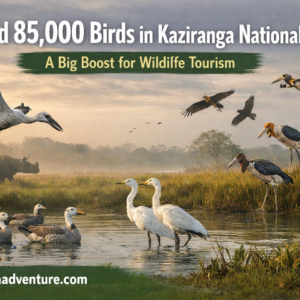
Kaziranga’s wetlands and beels transform into vibrant avian habitats, especially during the winter season. Thousands of migratory birds arrive from Central Asia, Siberia, and other distant regions, turning the park into a paradise for birdwatchers and ornithologists.
Pelicans glide over lakes in coordinated groups, while storks and herons wade gracefully through shallow waters. Fishing eagles circle above, scanning for prey, and the iconic Great Indian Hornbill fills the air with its loud calls and striking presence. Resident birds and migratory species coexist in these nutrient-rich wetlands, supported by abundant fish, insects, and aquatic plants.
This impressive birdlife enhances the Kaziranga National Park flora and fauna diversity and demonstrates the strength of the wetlands and marshlands supporting Kaziranga wildlife. Bird activity can be observed throughout the day, making Kaziranga a year-round destination for bird enthusiasts.
Reptiles and Aquatic Life
Beyond mammals and birds, Kaziranga’s ecosystem also supports a wide range of reptiles and aquatic animals. Indian pythons, king cobras, and monitor lizards inhabit the marshy patches and forest edges. These reptiles help regulate populations of rodents and smaller animals, contributing to ecological balance.
Turtles bask along muddy banks while numerous fish species thrive in the beels and water channels. These aquatic habitats are lifelines for both terrestrial and aquatic species. The mighty Brahmaputra River further enriches the ecosystem by supporting the endangered Ganges river dolphin near Kaziranga, a symbol of a healthy river system.
Together, reptiles, fish, and aquatic mammals highlight how water sustains the biodiversity of Kaziranga and connects all life forms within the park.
A Living Example of Conservation Success
Kaziranga’s global recognition is deeply connected to its importance in Indian wildlife conservation. Decades of strict anti-poaching efforts, scientific habitat management, and continuous monitoring have protected numerous endangered animals. Forest guards patrol the park regularly, and modern surveillance methods ensure wildlife safety.
Local communities also contribute to conservation by supporting ecotourism and sustainable practices. This partnership between authorities and residents has strengthened the long-term sustainability of the park. The recovery of rhino populations, stable tiger numbers, and flourishing birdlife is living proof of successful conservation strategies.
Kaziranga today stands as a model for biodiversity and wildlife conservation in Kaziranga, Assam, India, inspiring similar efforts worldwide.
FAQs
It is best known for the world’s largest population of the Great Indian one-horned rhinoceros and its rich mix of tigers, elephants, buffalo, deer, birds, and reptiles.
The floods renew the land with fertile silt, helping fresh grass and plants grow that support the entire food chain.
Rhinos, elephants, wild water buffalo, swamp deer, hog deer, wild boars, many birds, and occasionally tigers and leopards.
Strong protection, anti-poaching efforts, and habitat management have helped endangered species like the rhino recover.
Yes, its wetlands attract numerous resident and migratory birds, making it ideal for birdwatching and research.
Conclusion
The fauna of Kaziranga National Park in Assam, India, highlights how nature flourishes when protected with care and commitment. Shaped by the Brahmaputra’s floods, its grasslands, wetlands, and forests support an extraordinary range of wildlife, where every species helps maintain ecological balance.
From tigers in tall elephant grass to grazing rhinos, wandering elephants, vibrant migratory birds, and reptiles along riverbanks, Kaziranga’s rich biodiversity clearly shows why it is famous for rare wildlife species worldwide. Strong conservation efforts, habitat management, and community support have made the park a global model for biodiversity and wildlife conservation in Kaziranga, Assam, India.