
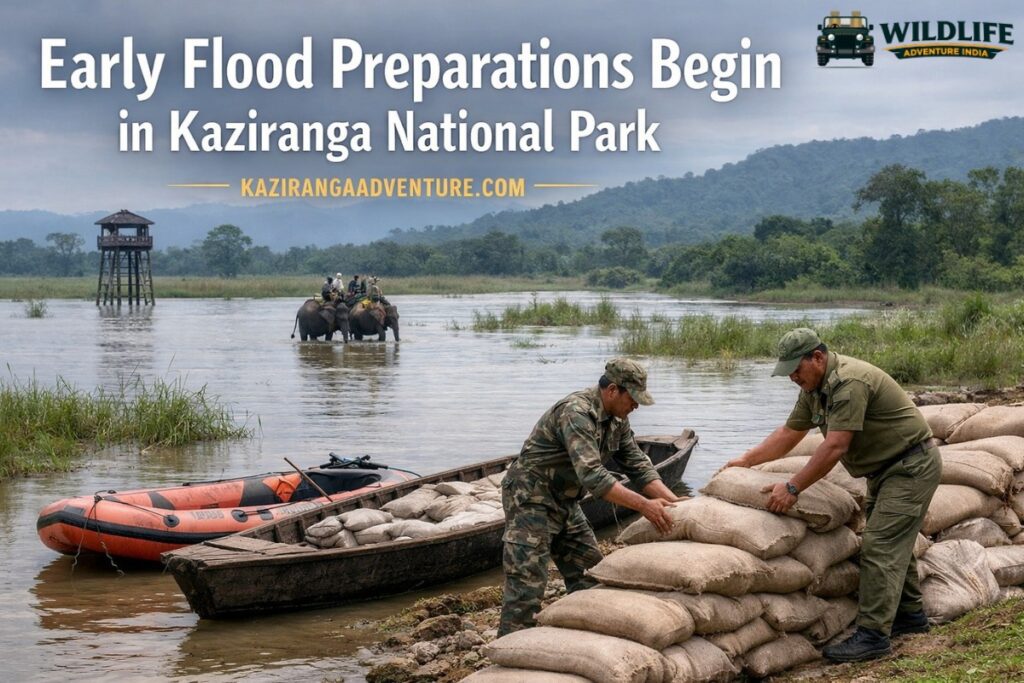
Early Flood Preparations in Kaziranga
Every year, the monsoon season brings heavy rainfall to Assam, causing the powerful Brahmaputra River to overflow into nearby floodplains. As part of its annual Kaziranga National Park flood preparations, forest authorities have begun early measures to safeguard wildlife and maintain ecological balance inside Kaziranga National Park.
These early flood preparations in Kaziranga National Park aim to reduce risks to animals and ensure the park remains well-prepared before the monsoon season begins.
Preparing for the Monsoon Flood Season
Officials from the forest department have started strengthening the flood management system in Kaziranga months before heavy rains arrive. The Kaziranga forest department flood preparation plan includes repairing artificial highlands, strengthening watchtowers, improving drainage channels, and closely monitoring vulnerable areas.
Highlands play a crucial role during floods. These raised platforms provide safe shelter for animals when water spreads across the grasslands of Kaziranga National Park. Species such as deer, wild boar, and the famous Indian one-horned rhinoceros depend on these elevated areas during rising water levels.
Wildlife Safety Measures During Floods
The wildlife safari safety measures during floods in Kaziranga are an important part of the park’s conservation strategy. Kaziranga is globally known for its population of the Indian one-horned rhinoceros and also supports elephants, tigers, swamp deer, and hundreds of bird species.
During floods, animals often move toward nearby hills and forest corridors. Authorities ensure these wildlife corridors around Kaziranga National Park remain open so animals can migrate safely to higher ground. Special monitoring teams are deployed to track animal movement and provide assistance if any wildlife becomes injured or stranded during the flooding period.
Monitoring Rising Water Levels
As part of the Kaziranga monsoon flood-monitoring system, officials closely track water levels of the Brahmaputra River. Since the river flows along the northern boundary of Kaziranga National Park, rising water levels can quickly affect large sections of the park.
Early monitoring allows forest authorities to activate rescue teams and emergency response measures when required.
Traffic Control to Protect Migrating Animals
Flood season often forces wildlife to cross nearby highways in search of higher ground. To reduce accidents, traffic regulations and speed restrictions are implemented on roads surrounding Kaziranga National Park. Forest officials work with local authorities and police departments to enforce these safety measures. Temporary speed limits and awareness campaigns help protect animals moving across roads during flood migration.
Rescue Teams and Emergency Support
Wildlife rescue operations are an essential part of Kaziranga National Park flood management. Rescue boats, veterinary teams, and trained staff remain on standby during the monsoon season.
These teams respond quickly if animals become trapped in floodwaters or need medical assistance. Over the years, coordinated rescue efforts by forest officials, conservation organisations, and volunteers have helped save many animals during flood emergencies.
Floods: A Natural Part of Kaziranga’s Ecosystem
Although floods can create challenges, they are also essential for the ecological health of Kaziranga National Park. Seasonal flooding replenishes soil nutrients, supports fresh grass growth, and maintains the wetland habitats that many species depend on.
This natural cycle helps sustain the park’s rich biodiversity and contributes to the long-term survival of its wildlife.
Conclusion
The early flood preparations in Kaziranga National Park demonstrate the commitment of forest authorities to protect wildlife and preserve one of India’s most important natural habitats. By strengthening infrastructure, monitoring water levels, and preparing rescue teams, the park continues to improve its ability to handle seasonal floods.
Through proactive conservation efforts and careful planning, Kaziranga National Park remains Kaziranga National Park serves as a global model for successful wildlife protection and ecosystem management.