Kaziranga National Park, a UNESCO World Heritage Site in Assam, India, is world-renowned for its population of the one-horned rhinoceros. Beyond rhinos, the park shelters tigers, elephants, swamp deer, wild buffalo, and hundreds of bird species. While many visitors associate Kaziranga with the dry season from November to April, the monsoon months—from June to September—offer a unique, serene, and lush experience. During this time, the park transforms into verdant grasslands, flooded wetlands, and shimmering water bodies, creating a magical setting for wildlife enthusiasts, photographers, and nature lovers alike.
If you’re planning a monsoon visit, it’s essential to know which safari zones remain open, ensuring both safety and an unforgettable wildlife adventure.
Best Safari Zones to Visit During Monsoon
Heavy rains and seasonal flooding restrict access to certain areas of the park. However, some zones remain well-prepared for visitors:
Central Range
The heart of Kaziranga, the Central Range, is one of the most popular zones. Home to large herds of rhinos and swamp deer, the monsoon enhances its lush greenery and waterlogged grasslands, offering excellent opportunities to observe wildlife in a calm and natural setting.
Western Range
Famous for its breathtaking scenery, the Western Range features elevated safari trails that remain accessible even during heavy rainfall. Ideal for jeep safaris, visitors can spot rhinos, elephants, and migratory birds taking shelter in wetlands.
These zones not only stay open but also provide the best chances of witnessing wildlife thriving in their monsoon habitat.
Monsoon Safari Timings
During the rainy season, safari schedules differ from the dry season. To ensure safety on slippery and waterlogged paths, safari operations are generally restricted to morning and afternoon. hours:
- Morning Safari: 6:00 AM – 9:00 AM
- Afternoon Safari: 2:00 PM – 5:00 PM
Always check with park authorities before visiting, as sudden rainfall may temporarily close certain trails.
Wildlife Safari Options Open in Monsoon
Despite the rains, several safari options remain operational:
Jeep Safaris
Jeep safaris are the most reliable option during the monsoon. Trails in the Central and Western zones are well-maintained, and guides are experienced in navigating waterlogged areas while helping visitors spot wildlife.
Elephant Safaris
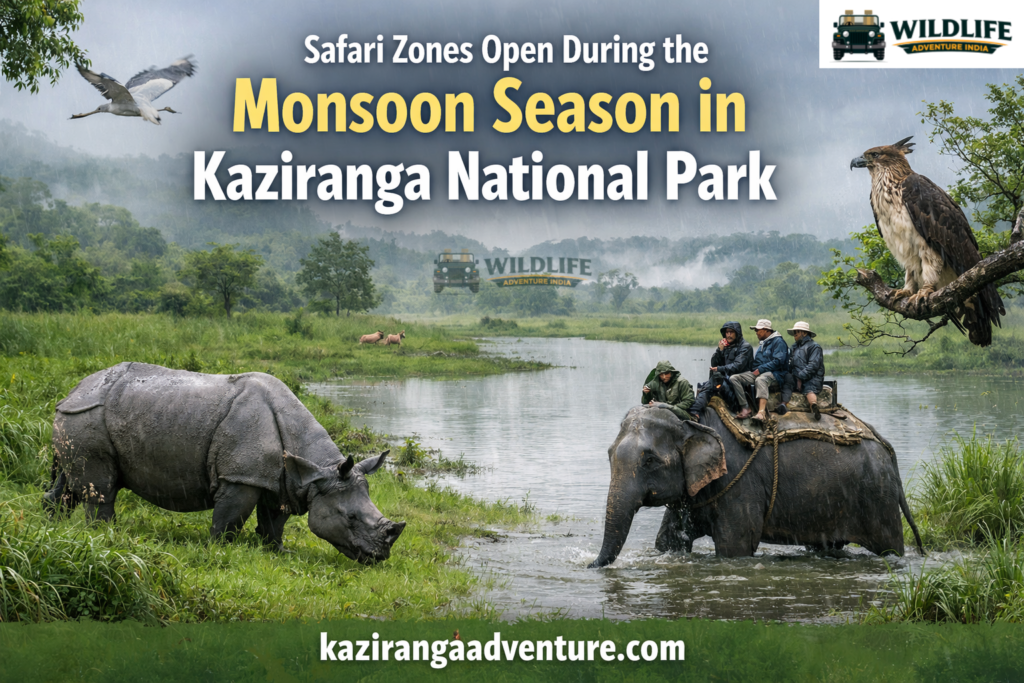
Elephant safaris are limited to elevated trails in the Central Range. They provide a safe and unique way to get close to rhinos and other wildlife.
Monsoon safaris benefit from fewer crowds, offering a more intimate wildlife experience. Water-filled marshes attract a variety of birds, making them a paradise for birdwatchers.
Kaziranga Zones Accessible During Monsoon
Certain areas of Kaziranga remain closed due to flooding:
- Closed: Eastern and Burapahar Ranges
- Open: Parts of the Central Range and specific elevated trails in the Western Range
These accessible zones have raised safari tracks, well-maintained roads, and expert guides to ensure safe visits. While accessibility is limited compared to the dry season, the monsoon scenery is visually stunning.
Planning a Monsoon Safari
For a smooth and enjoyable visit, keep these points in mind:
- Clothing: Waterproof jackets, ponchos, and quick-drying clothes are essential. Avoid cotton, which retains water.
- Footwear: Waterproof boots or durable shoes with strong traction are crucial for navigating muddy trails.
- Gear: Binoculars, waterproof camera covers, and rain protection for electronics are recommended.
- Booking: Early booking is advised, as safari slots are limited despite the off-peak season.
- Guides: Experienced local guides, well-versed in seasonal wildlife patterns, can take you to the prime spots for observing animals.
Tips for Visiting During Heavy Rainfall
- Check daily safari updates for zone closures.
- Prioritise jeep safaris over elephant rides in wet conditions.
- Protect cameras, phones, and binoculars with waterproof covers.
- Stay alert for wildlife near elevated areas and water bodies.
- Travel light to navigate slippery and muddy trails safely.
Monsoon Wildlife Highlights
Monsoon transforms Kaziranga into a vibrant green haven:
- Birdwatching: Wetlands attract storks, pelicans, kingfishers, and other migratory species.
- Herbivore Sightings: Swamp deer, elephants, and rhinos often graze near waterlogged fields.
- Predator Tracking: Tigers, though elusive, may be spotted near riverbanks.
- Flora Exploration: Lush greenery, blooming flowers, and dense vegetation offer insights into the park’s ecosystem.
The off-season provides rare wildlife sightings and a serene natural experience.
Travel Guide for Monsoon Safaris
- Accommodation: Opt for lodges or resorts equipped with proper drainage and facilities designed for a comfortable monsoon stay.
- Transportation: Roads can be slippery and partially submerged; suitable vehicles are essential.
- Safari Timing: Morning safaris are ideal; afternoon trips may be interrupted by sudden showers.
- Local Culture: Engage with nearby communities to learn about seasonal wildlife behaviour and conservation efforts.
Accessible Safari Trails
- Central Range Elephant Trails: Elevated and safe, offering close rhino encounters.
- Western Range Jeep Trails: Well-maintained paths perfect for monsoon wildlife viewing.
These zones allow tourists to enjoy safe, guided safaris while experiencing active monsoon wildlife.
Photography Opportunities
The monsoon is a dream for photographers:
- Vibrant green landscapes with water reflections
- Migratory and resident birds
- Wildlife behaviour amid flooded habitats
- Stunning sunrise and misty morning views
Rare moments like rhinos grazing in flooded grasslands or elephants playing in waterholes can be captured.
Why Visit Kaziranga in Monsoon?
- Fewer Crowds: Enjoy a tranquil safari experience.
- Lush Scenery: Grasslands, wetlands, and forests are at their peak vibrancy.
- Active Wildlife: Animals often congregate near water sources.
- Photography Opportunities: Dramatic lighting and lush landscapes abound.
- Peaceful Experience: Rainfall combined with wildlife sounds creates an immersive nature experience.
By understanding which safari zones are open, planning carefully, and following practical tips, visitors can experience a completely different, vibrant, and serene side of Kaziranga National Park.
During the monsoon season (typically June to September), only the central and western ranges of Kaziranga National Park are partially accessible. The eastern range is usually closed due to heavy flooding and unsafe conditions.
The monsoon brings lush greenery and abundant water, which attracts animals to higher ground. While some areas are inaccessible, wildlife, including one-horned rhinoceroses, elephants, and swamp deer, can still be spotted in the open zones.
It’s recommended to book safaris after checking daily park updates, as openings depend on rainfall and waterlogging. Early mornings are usually safer and better for wildlife spotting.
Yes, visitors can explore:
- Local villages and tea gardens nearby
- Kaziranga National Park interpretation centres
- Birdwatching along the accessible flood-free areas