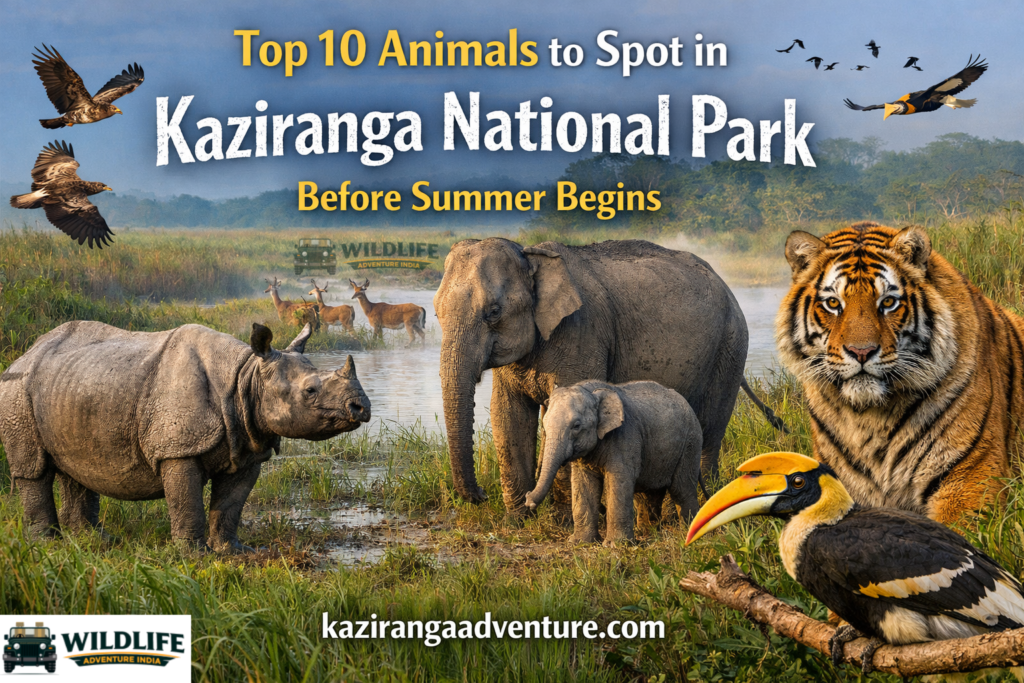
Kaziranga National Park, situated on the fertile floodplains of the mighty Brahmaputra River in Assam, is one of India’s premier wildlife destinations and a proud UNESCO World Heritage Site. Known for its rich biodiversity, wide grasslands, wetlands, and dense forests, the park attracts thousands of visitors every year.
This Kaziranga National Park wildlife viewing guide, before summer, helps travellers understand the best time to see wildlife in Kaziranga National Park, India, and discover the most exciting species living here. The months of February to April are considered the ideal period because the weather is pleasant, vegetation becomes less dense, and animals gather near water bodies.
If you are planning a safari, this guide covers the top 10 animals to spot in Kaziranga National Park before summer begins, including the best animals to see in Kaziranga National Park in February and March and the most famous animals of Kaziranga National Park, Assam, India.
Below is a detailed guide to the must-see wildlife in the Kaziranga National Park safari experience.
Why Visit Kaziranga Before Summer Begins
Before exploring the animals found in Kaziranga National Park, Assam, it is important to understand why the pre-summer season is ideal.
- The weather is comfortable for jungle safaris.
- Tall grass becomes shorter, improving visibility.
- Wildlife movement increases near rivers and wetlands.
- It is the best time to see wildlife in Kaziranga National Park, India.
- Many migratory birds are still present.
Because of these reasons, February and March offer excellent opportunities to see the top wildlife attractions in Kaziranga National Park, India, and enjoy unforgettable nature experiences.
Top 10 Animals to Spot in Kaziranga National Park
This section highlights the most exciting wildlife to see in Kaziranga National Park before the summer season and the best animals to spot on the Kaziranga National Park jeep safari.
1. Indian One-Horned Rhinoceros
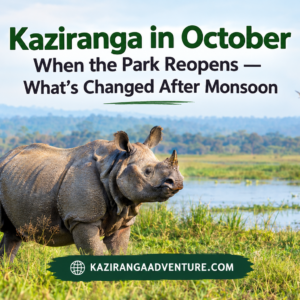
The Indian one-horned rhinoceros is the main attraction and one of the most famous animals of Kaziranga National Park, Assam, India. Kaziranga holds nearly two-thirds of the world’s population of this species.
These huge herbivores have thick, armour-like skin and a single horn. They are usually seen grazing peacefully in grasslands or cooling themselves in muddy water.
Why They Are Special
- One of the rarest animals in the world
- Major conservation success story
- Easy to spot during early morning safaris
For many travellers, spotting a rhino is the highlight of the top 10 animals to spot in Kaziranga National Park before summer begins.
2. Bengal Tiger
Kaziranga is renowned for having one of the densest populations of tigers anywhere on the planet. Although tigers are difficult to spot because of their secretive nature, they remain among the most exciting animals found in Kaziranga National Park, Assam.
They usually hide in tall grasslands and forests but sometimes appear during jeep safaris.
Best Time to See
- Late winter and pre-summer season
- Early morning or evening safari drives
Seeing a tiger is a thrilling part of the must-see wildlife in the Kaziranga National Park safari experience.
3. Asian Elephant
Wild Asian elephants move freely across the park in large family groups. Watching them interact, protect their young, and travel together is an unforgettable sight.
They are among the best animals to see in Kaziranga National Park in February and March because they often gather near water sources.
Where to Find Them
- Riverbanks
- Open grasslands
- Woodland areas
Elephants are one of the most loved top wildlife attractions in Kaziranga National Park, India.
4. Wild Water Buffalo
The wild water buffalo is one of the strongest animals in the park. It has massive curved horns and a powerful body.
Kaziranga protects the world’s largest population of wild water buffalo, making them an important part of the wildlife to see in Kaziranga National Park before the summer season.
Why They Stand Out
- Larger than domestic buffalo
- Strong and protective behaviour
- Often seen in wetlands
They are frequently spotted during animals to spot in Kaziranga National Park jeep safari tours.
5. Swamp Deer (Barasingha)
Swamp deer, also called barasingha, are graceful animals known for their beautiful branched antlers. They live mainly in marshy grasslands.
They are among the most peaceful animals found in Kaziranga National Park, Assam.
Best Viewing Tips
- Visit the open grasslands early in the morning
- Watch for group grazing behaviour.
These deer are an essential part of the Kaziranga National Park wildlife viewing guide before summer.
6. Hog Deer
Hog deer are smaller and more secretive than swamp deer. They run through grasslands with a unique movement similar to pigs, which is how they got their name.
They represent the diverse range of wildlife to see in Kaziranga National Park before the summer season.
Why Spot Them?
- Unique running style
- Adapted to floodplain habitat
- Common in grassland zones
They are among the best animals to see in Kaziranga National Park in February and March due to increased visibility.
7. Indian Leopard
The Indian leopard is another powerful predator living in the park. Although rare to spot, they are sometimes seen resting on trees or moving quietly through forests.
Leopards add excitement to the must-see wildlife in the Kaziranga National Park safari experience.
Best Chances
- Dawn or dusk safari
- Forested areas
They remain one of the most fascinating top wildlife attractions in Kaziranga National Park, India.
8. Sloth Bear
With their shaggy black coats and unmistakably long snouts, sloth bears are hard to miss in the wild. They feed on termites, fruits, and honey.
They are rarely seen, making them a special sight in the top 10 animals to spot in Kaziranga National Park before summer begins.
Where to Look
- Woodland areas
- Cooler morning hours
Spotting a sloth bear is an exciting moment during the jeep safari to spot animals in Kaziranga National Park.
9. Hoolock Gibbon
The hoolock gibbon is India’s only ape species. It lives in forest canopies and is known for its loud calls and fast tree-swinging movement.
It is one of the most unique animals found in Kaziranga National Park, Assam.
Why They Are Unique
- Only ape species in India
- Strong family bonds
- Musical vocal calls
They are an important highlight of the Kaziranga National Park wildlife viewing guide before summer.
10. Migratory and Resident Birds
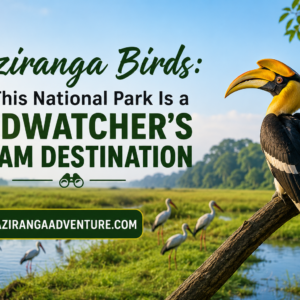
Kaziranga becomes a paradise for birdwatchers before summer. The park hosts pelicans, hornbills, storks, eagles, and many migratory birds.
Birdwatching is a major part of the wildlife to see in Kaziranga National Park before the summer season.
Best Season
- Late winter to early summer
- Wetlands and river areas
Bird species make the park one of the richest top wildlife attractions in Kaziranga National Park, India.
Best Time to See Wildlife in Kaziranga National Park, India
Understanding the season is important when planning to see the top 10 animals to spot in Kaziranga National Park before summer begins.
February to March
- Pleasant weather
- Excellent animal activity
- Clear safari visibility
- Ideal for photography
This period offers the best animals to see in Kaziranga National Park in February and March, especially rhinos, elephants, and deer.
April (Early Summer)
- Animals gather near water.
- Higher chances of predator sightings
- Good time for jeep safaris
This makes pre-summer the best time to see wildlife in Kaziranga National Park, India.
Safari Experience in Kaziranga
Visitors can explore the park through guided tours and safari rides. The safari experience allows travellers to observe the must-see wildlife in the Kaziranga National Park safari adventure safely.
Types of Safaris
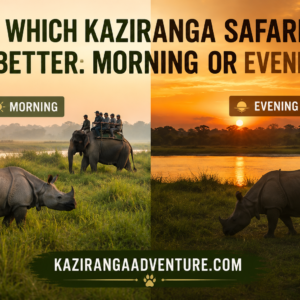
- Jeep safari for exploring large areas
- Elephant safari for close wildlife views
Both options provide opportunities to see the animals in Kaziranga National Park’s jeep safari routes and different habitats.
Importance of Wildlife Conservation
Kaziranga plays a major role in protecting endangered species. Many of the famous animals of Kaziranga National Park, Assam, India, including the Indian rhinoceros, are protected through strong conservation programmes.
The park’s ecosystem supports:
- Rare mammals
- Unique birds
- Wetland biodiversity
- Grassland species
This makes it one of the most important conservation areas in Asia.
Travel Tips for Wildlife Viewing
To fully enjoy the Kaziranga National Park wildlife viewing guide before summer, follow these simple tips:
- Choose early-morning safaris.
- Maintain silence during wildlife sightings.
- Carry binoculars and a camera.
- Wear comfortable clothes.
- Follow park safety rules.
These tips increase your chances of seeing the top 10 animals to spot in Kaziranga National Park before summer begins.
Final Thoughts
Kaziranga National Park offers one of the most exciting wildlife experiences in India. From the majestic rhinoceros and powerful tiger to rare primates and colourful birds, the park showcases extraordinary biodiversity.
Exploring the wildlife to see in Kaziranga National Park before the summer season gives visitors the chance to witness nature at its best. The pleasant climate, active animals, and open landscapes make this period ideal for safaris.
If you are looking for the best animals to see in Kaziranga National Park in February and March, planning a trip during the pre-summer months will give you unforgettable memories. This guide to the top 10 animals to spot in Kaziranga National Park before summer begins helps travellers discover the most exciting species, understand the best time to see wildlife in Kaziranga National Park, India, and explore the incredible animals found in Kaziranga National Park, Assam.
A visit here is not just a safari — it is a journey into one of the world’s richest wildlife habitats and one of the greatest top wildlife attractions in Kaziranga National Park, India.