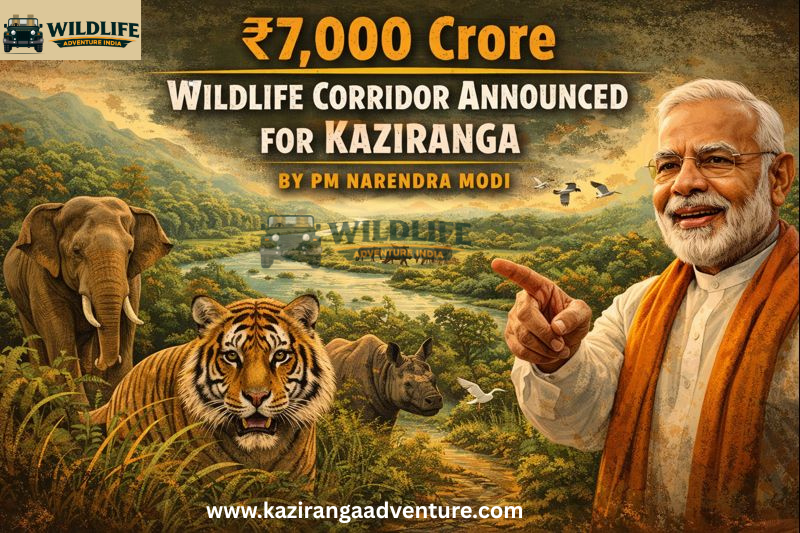
Kaziranga National Park in Assam has once again come into national focus after Prime Minister Narendra Modi announced a major conservation and infrastructure project worth ₹7,000 crore. This ambitious project involves building a 35 km long elevated wildlife corridor that will help protect animals while also improving road connectivity in the region.
The project reflects a strong effort by the government to balance development with environmental protection. Instead of allowing roads and infrastructure to harm wildlife, the plan focuses on building infrastructure that respects nature. The announcement highlights India’s growing commitment to wildlife conservation, sustainable development, and community participation.
For travellers planning a visit through Kaziranga wildlife experiences, this development promises a safer and more sustainable future for both animals and tourism.
Kaziranga is one of India’s most valuable natural treasures, and this decision marks an important step toward securing its future.
A Special Report on Kaziranga’s Transformation
In this Special Report, Prime Minister Narendra Modi highlights the transformative infrastructure and conservation efforts in Assam’s Kaziranga National Park. The Prime Minister announced a ₹7,000 crore project to construct a 35-kilometre elevated wildlife corridor aimed at ensuring the safe movement of rhinos, elephants, and tigers while preserving connectivity between Kaliabor and Numaligarh. Highlighting the success of conservation, he stated, “Since 2025, not a single incident of rhino hunting has come before.” Modi credited this achievement to the BJP government’s political will, modern surveillance, and the participation of “Van Durgas”. He further highlighted India’s global leadership in balancing “economy and ecology”, citing the increase in forest cover through the Ek Ped Maa Ke Naaminitiative and the expansion of the Ramsar sites network. The Prime Minister also pointed out that growing tourism in Kaziranga is generating new livelihood opportunities through homestays and handicrafts, demonstrating that conservation and development can move forward together. This statement clearly reflects the government’s vision. It shows how strong policies, technology, and people’s participation can work together to protect wildlife while supporting development.
Understanding the Importance of Kaziranga National Park
Kaziranga National Park is a UNESCO World Heritage Site and is globally famous for hosting the largest population of the one-horned rhinoceros. Spread across the floodplains of the Brahmaputra River, the park supports a rich ecosystem that includes grasslands, wetlands, forests, and rivers.
Apart from rhinos, Kaziranga is home to:
- Asian elephants
- Royal Bengal tigers
- Wild water buffalo
- Swamp deer
- Leopards, bears, and hundreds of bird species
The park plays a critical role in preserving biodiversity in Northeast India. However, increasing traffic, highways, and development near the park have created risks for wildlife. Animals often cross roads during migration or floods, leading to accidents and loss of life.
The new wildlife corridor directly addresses this long-standing problem.
What Is the Elevated Wildlife Corridor?
The ₹7,000 crore elevated wildlife corridor is a 35 km long structure planned between Kaliabor and Numaligarh. This route is important for both transportation and wildlife movement. However, heavy traffic has made it dangerous for animals to cross.
The elevated corridor will allow vehicles to pass above while animals move freely below. This design ensures that:
- Animals can migrate safely.
- Natural animal paths are not blocked.
- Human-animal conflict is reduced.
Such corridors are especially important in Kaziranga, where animals move frequently due to floods and seasonal changes.
Why Elevated Corridors Are Needed
Kaziranga faces heavy monsoon floods every year. During floods, animals move from low-lying areas to higher ground. Roads and highways often lie in these movement paths, making crossings dangerous.
Without proper wildlife corridors:
- Animals are hit by speeding vehicles.
- Natural habitats get fragmented.
- Stress levels among wildlife increase
The elevated corridor solves these problems by allowing uninterrupted animal movement. It is an example of wildlife-sensitive infrastructure planning.
Protecting Rhinos: A Remarkable Achievement
One of the most significant points made by the Prime Minister was regarding rhino protection. He stated that since 2025, not a single case of rhino hunting has been reported in Kaziranga.
This is a historic achievement, considering that rhino poaching was once a serious threat in the region. Rhinos are targeted for their horns, making them vulnerable to illegal hunting.
The Prime Minister credited this success to:
- Strong political commitment
- Advanced surveillance systems such as cameras and drones
- Increased forest patrolling
- The active role of local women’s groups known as “Van Durgas”
Role of Van Durgas in Conservation
The Van Durgas are local women trained to support forest protection efforts. They help in:
- Monitoring forest areas
- Spreading awareness in villages
- Supporting forest guards
- Acting as a bridge between communities and authorities
Their involvement has strengthened conservation at the grassroots level. It has also empowered women by giving them a meaningful role in protecting their natural heritage.
Technology and Modern Surveillance
Modern technology has played a major role in improving conservation outcomes in Kaziranga. Surveillance cameras, drones, and real-time monitoring systems help forest officials track movement and detect threats quickly.
This has helped:
- Reduce poaching
- Improve response time
- Monitor animal movement patterns
Technology, when combined with human effort, has proven to be a powerful tool for conservation.
Economy and Ecology Growing Together
Prime Minister Modi strongly emphasised that India is showing the world how “economy and ecology” can grow together.
In the past, development was often seen as harmful to the environment. Today, the approach is changing. The focus is on sustainable growth that protects nature while improving lives.
Key initiatives mentioned include:
- Expansion of forest cover across the country
- The “Ek Ped Maa Ke Naam” campaign, encouraging citizens to plant trees
- Growth of the Ramsar wetlands network, protecting important water ecosystems
These efforts help fight climate change, protect biodiversity, and ensure long-term environmental health.
Tourism as a Tool for Conservation
Kaziranga National Park has seen a rise in tourism in recent years. According to the Prime Minister, this increase is creating new livelihood opportunities for local communities.
Tourism has helped in:
- Growth of homestays managed by local families
- Promotion of traditional handicrafts
- Employment for guides, drivers, and hospitality workers
Visitors booking their jungle experience through Kaziranga Safari Booking are directly supporting local livelihoods while enjoying responsible wildlife tourism.
Community Participation Matters
Local communities play a crucial role in protecting Kaziranga. When people living near the park understand the value of wildlife, they help protect it.
Government initiatives, awareness programmes, and tourism benefits have encouraged community participation. This approach ensures long-term conservation success.
Why This Corridor Is Important for the Future
The elevated wildlife corridor is not just a road project. It is a long-term investment in:
- Wildlife safety
- Sustainable transport
- Climate-resilient infrastructure
As climate change increases flooding and habitat stress, such projects become even more important. The corridor will help animals adapt to changing conditions without coming into conflict with humans.
A Model for the Rest of India
This project can serve as a model for other wildlife-rich regions in India. Many national parks and reserves face similar challenges due to highways and development.
By designing infrastructure that respects wildlife, India can protect its natural heritage while continuing to grow.
India’s Rising Global Leadership in Conservation
With projects like the Kaziranga wildlife corridor, India is emerging as a global leader in conservation-focused development.
The Prime Minister highlighted that India is proving it is possible to:
- Protect endangered species
- Build modern infrastructure
- Improve local economies
- Preserve forests and wetlands
This balanced approach is gaining attention worldwide.
Conclusion
The announcement of the ₹7,000 crore elevated wildlife corridor for Kaziranga National Park marks a historic milestone in India’s conservation journey. It reflects a clear vision where development does not come at the cost of nature.
By ensuring safe movement for rhinos, elephants, and tigers, eliminating poaching, empowering local communities, and promoting sustainable tourism, Kaziranga stands as a powerful example of how nature and progress can coexist.
Under this initiative, Kaziranga is not just being protected—it is being prepared for a strong, sustainable, and secure future for generations to come.